
how to remove ice from windshield fast usually comes down to two things: warming the glass the right way and breaking the ice bond without shocking your windshield.
If you have ever stood outside late for work, scraping forever while your fingers go numb, you already know the real problem is not “ice,” it is time, visibility, and avoiding dumb mistakes that crack glass or damage wipers.
This guide focuses on what works in many U.S. winter conditions, what to skip, and how to set up a simple routine so the next cold snap feels less like a daily penalty.
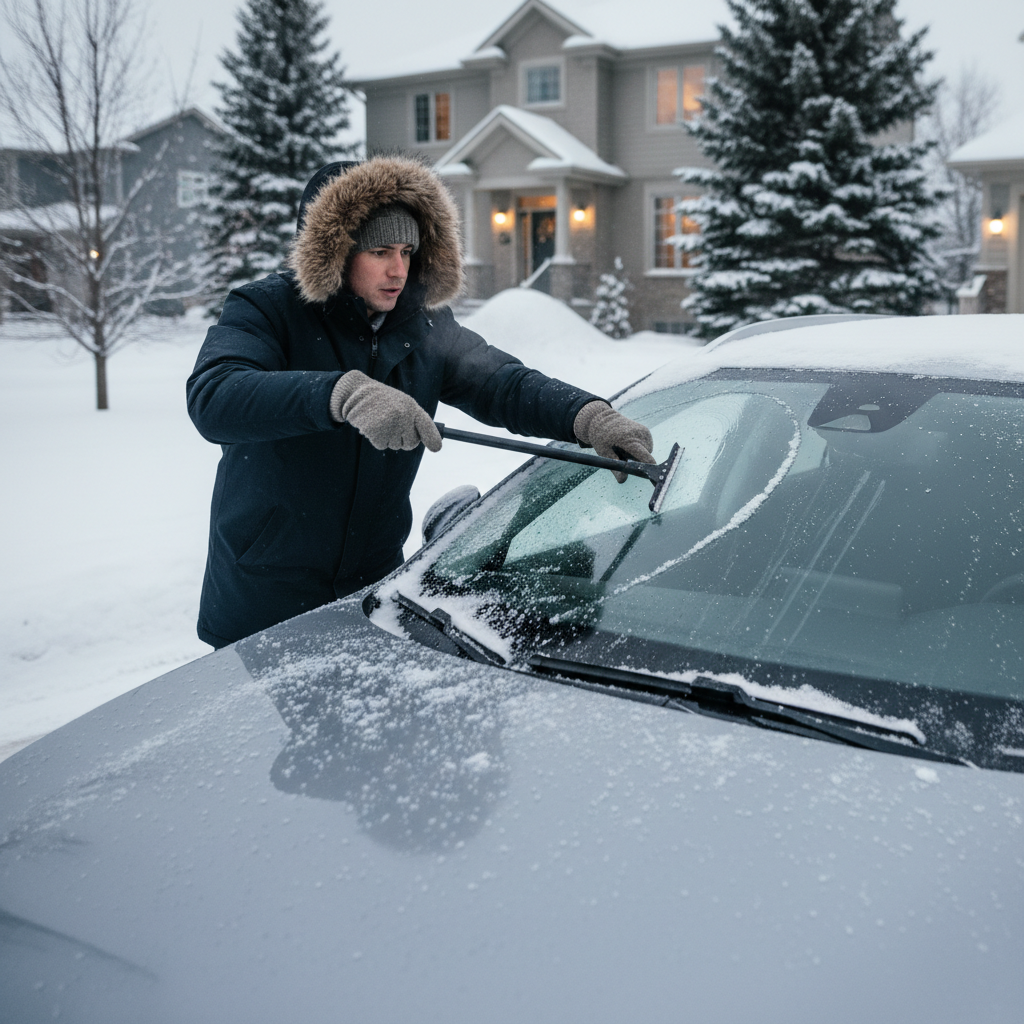
Start with safety: what not to do (even if you are late)
Before jumping into “fast hacks,” it helps to call out the few moves that create expensive problems. A windshield is laminated glass, and it handles gradual temperature change far better than sudden shock.
- Do not pour hot water on the windshield. Rapid temperature change can worsen existing chips and, in some cases, contribute to cracking.
- Do not use a metal tool like a shovel edge, screwdriver, or kitchen spatula. Scratches reduce visibility at night and in rain.
- Do not run wipers over heavy ice. You can tear the rubber or burn out a struggling wiper motor.
- Do not drive with a “peephole” view. Many states require clear visibility; more importantly, it is a safety risk.
According to NHTSA, maintaining clear visibility is a core part of safe driving in winter conditions, and even small visibility issues can raise crash risk. If you feel tempted to compromise, that is a sign you need a faster routine, not less clearing.
The fast method that works most mornings: heat + airflow + the right scrape
If you want a repeatable approach, this is the sequence that tends to clear ice quickly without stressing the glass. It is also the method most people can do with no special gear.
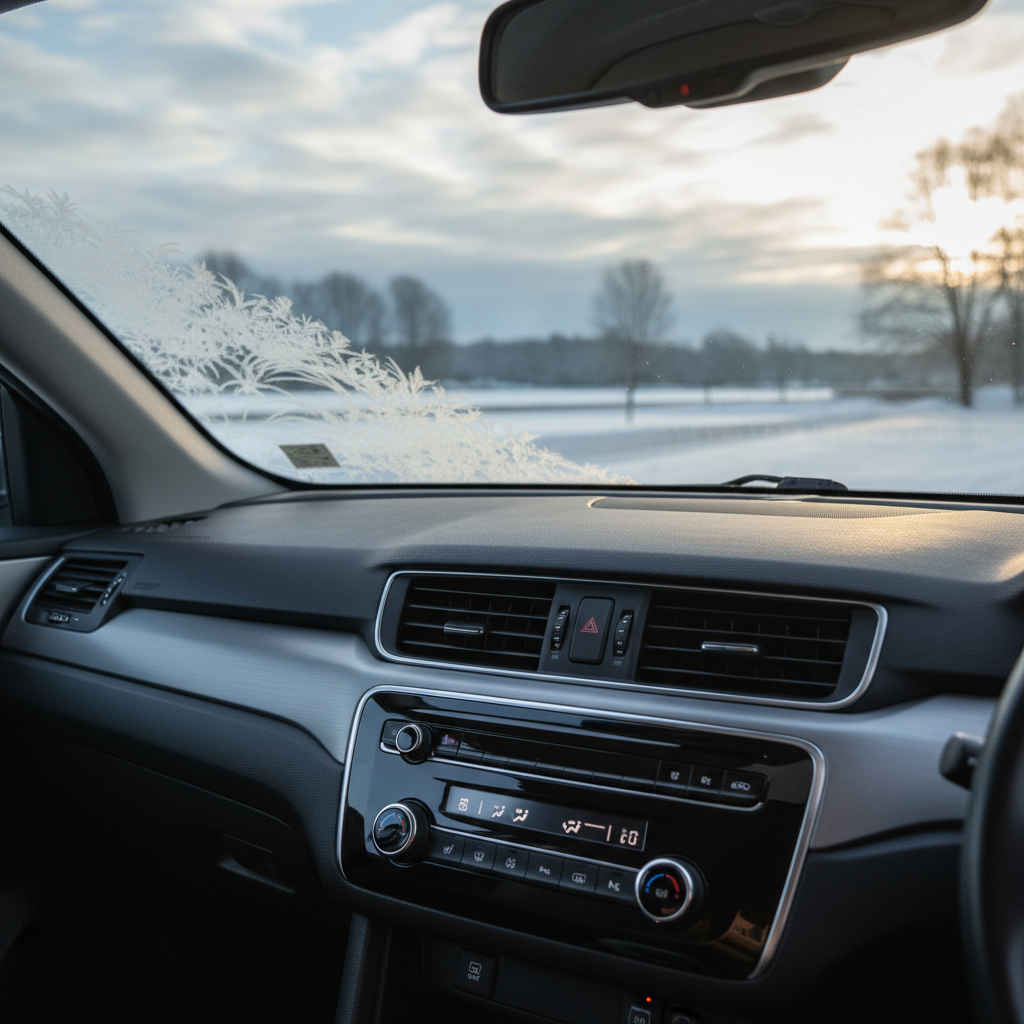
Step 1: Start the car and set a “defrost plan,” not random heat
Turn on the engine, set airflow to the windshield defrost setting, and use moderate warm air, not max heat immediately. Turn on the rear defroster too, even if the front is the main issue.
- Turn off recirculation, use outside air to reduce fogging.
- A/C on with defrost often helps dehumidify, which reduces interior fog.
- If you have heated windshield or wiper de-icers, turn them on early.
Step 2: Clear snow first, then attack the ice
Brush loose snow off the windshield and hood. Snow you leave on the hood often slides back onto the glass the moment you accelerate, which wastes your effort.
Step 3: Scrape with technique (it matters more than strength)
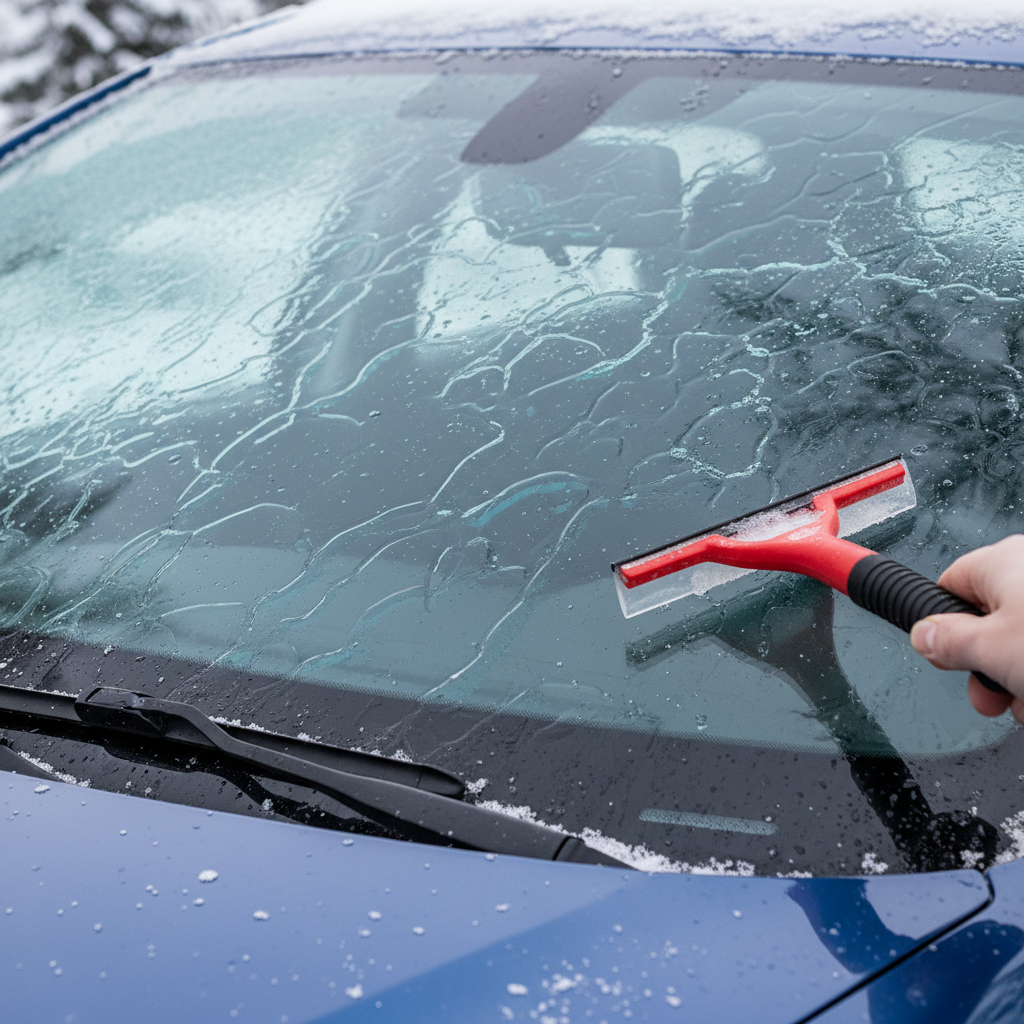
Use a plastic scraper with a sharp edge. Hold it at a shallow angle and push in longer strokes, working top to bottom. The goal is to lift sheets, not carve lines.
- Start at the edges where defrost warms first.
- Break large sections into smaller panels if the ice is thick.
- Keep the scraper edge clean, grit can scratch.
This routine is also a quiet way to answer how to remove ice from windshield fast without gambling on risky shortcuts.
De-icing options compared: sprays, homemade mixes, and what they are good for
When ice is thick or you are dealing with freezing rain, a de-icer can save real time. The tradeoff is cost, residue, and compatibility with paint and trim. Here is a practical comparison.
| Option | Speed | Pros | Cons / Cautions |
|---|---|---|---|
| Commercial de-icer spray | Fast | Convenient, predictable | Can leave residue, costs more over time |
| Isopropyl alcohol + water mix (common DIY) | Often fast | Cheap, helps break ice bond | May affect some waxes/trim; keep off interior plastics; store safely |
| Windshield washer fluid rated for winter | Medium | Designed for vehicles | Not a miracle on thick ice; do not rely on wipers to “plow” ice |
| Salt water | Fast initially | Low cost | Not recommended, can promote corrosion and leave grime |
If you use a spray, aim at the lower windshield edge and along the sides where ice anchors. Give it 20–60 seconds, then scrape. That pause feels slow, but it usually saves time overall.
Quick self-check: what kind of “ice problem” do you have today?
People get frustrated because they treat every icy windshield the same. A quick diagnosis helps you pick the fastest move.
- Light frost (thin, white haze): defrost + light scrape, sometimes even a firm brush works.
- Hard clear ice (cold night, refreeze): defrost longer, add de-icer, scrape in sheets.
- Freezing rain glaze: de-icer first, then scrape; expect it to take longer than you want.
- Ice under wiper blades: lift blades gently, clear the channel, and avoid forcing wipers.
- Fog inside plus ice outside: you need dehumidifying airflow, not just hotter air.
If the situation is “freezing rain glaze,” that is where most “how to remove ice from windshield fast” tips fail in practice, because the ice is bonded like a shell. Patience plus chemical help beats brute force.
Practical step-by-step routines for common scenarios
Here are a few “plug-and-play” routines people actually use, depending on where the car sits and what tools you have.
Scenario A: Parked outside overnight, moderate ice
- Start engine, set defrost with outside air.
- Brush snow off hood and windshield.
- Spray de-icer on edges and base of windshield.
- Scrape top-down, then clear side windows and mirrors.
- Finish by clearing wiper blades and the cowl area so slush does not refreeze.
Scenario B: No de-icer, just scraper and patience
- Defrost for 3–8 minutes depending on cold and vehicle.
- Scrape only after the surface starts turning “wet,” that is the bond weakening.
- Open a window slightly for a moment if interior fog builds.
Scenario C: You are traveling and need a fast stop solution
- Keep a compact scraper and winter washer fluid in the car.
- At the gas station, clear lights, mirrors, and the full windshield, not just a viewing hole.
- If conditions are severe, consider waiting a few minutes with defrost running rather than driving blind.
Even in a rush, this beats improvising with household tools, which is where chips and scratches usually happen.
Mistakes that waste time (and how to avoid them)
Most “slow de-icing days” are not because the ice is unbeatable, it is because you are fighting your own setup.
- Starting to scrape immediately while the glass is still rock-cold, you work harder for less progress.
- Ignoring side windows and mirrors, you might clear the windshield fast, then lose time trying to merge.
- Using washer fluid as the main de-icer, it can help, but it is not designed for thick ice removal.
- Leaving wiper blades frozen down, they refreeze quickly and then chatter and smear.
If you are consistently struggling, the fix is often boring: better scraper, winter washer fluid, and a two-minute head start in the morning.
Prevention: the easiest “fast” is not having ice in the first place
If you want how to remove ice from windshield fast to stop being a daily search query, prevention is where you win time back.
- Use a windshield cover on nights you expect frost or freezing rain. It is not glamorous, but it works.
- Park smart when you can, facing east can help in some locations because morning sun hits the glass sooner.
- Lift wiper blades before storms if your area is windy and safe to do so, or place a small barrier like a folded cloth under the blade to reduce freezing to glass.
- Keep a winter kit: scraper, brush, gloves, small towel, and winter-rated washer fluid.
According to AAA, winter driving preparation typically includes basic supplies and visibility checks, because small prep steps reduce roadside issues when temperatures drop. You do not need a fancy kit, you need a usable one.
Conclusion: a simple routine beats “miracle hacks”
Most mornings, the fastest path is steady defrost airflow, clearing snow first, then scraping with the right angle and a little patience. When ice is thicker or glazed, a de-icer and a short wait often saves more time than you expect.
If you take one action today, make it this: stash a decent scraper and winter washer fluid in the car, then give yourself a small defrost head start tomorrow. That combination usually changes the whole experience.
Key takeaways
- Avoid hot water, thermal shock can be a costly mistake.
- Heat + outside air + time weakens the ice bond so scraping goes faster.
- De-icer helps most with freezing rain glaze and thick ice sheets.
- Prevention is real, a windshield cover can save the most minutes per dollar.