
How to remove glue residue from car after decal comes down to two things: using the right chemical for the adhesive, and using the right amount of patience so you don’t scuff the clear coat.
If you’ve ever peeled off a vinyl decal and found a sticky shadow that grabs dust, you’re not alone. The residue might be old adhesive, sun-baked glue, or a mix of wax and dirt embedded into the sticky film, and each one behaves a little differently.
The good news is you can usually clean it at home with common detailing supplies. The not-so-fun part is that rushing, scraping dry, or using a harsh solvent can turn a minor nuisance into paint haze or dull spots.
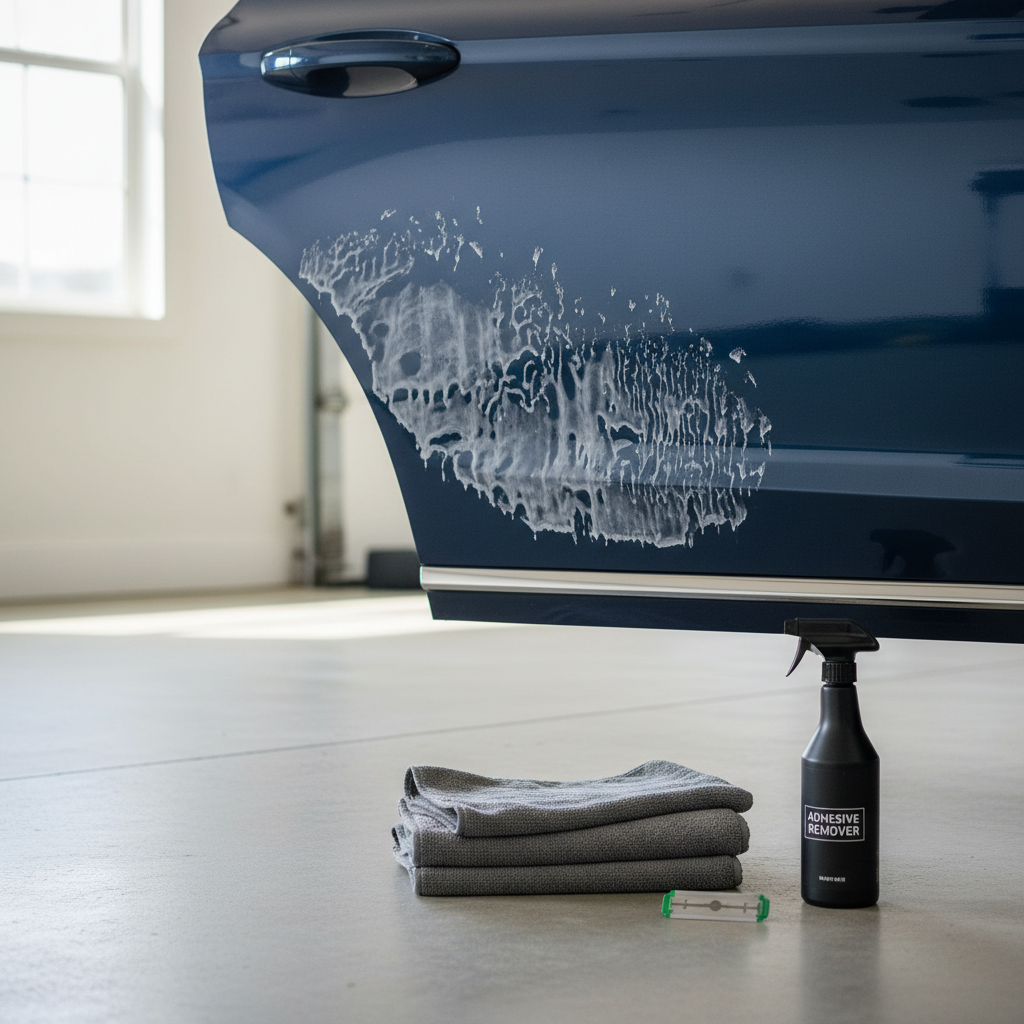
Why decal glue sticks around (and why it can be stubborn)
Most decals use pressure-sensitive adhesive designed to bond strongly but release cleanly—in theory. In real life, a few common conditions make residue likely.
- Heat and UV exposure: Sun can harden adhesive, making it crumble in some spots and smear in others.
- Age: Older decals often leave more glue behind, especially if they’ve been on for years.
- Clear coat texture and contamination: Wax, road film, and embedded grit can mix into the adhesive layer.
- Removal method: Pulling too fast, too cold, or at a steep angle tends to shear glue off onto the paint.
That’s why the “best product” varies. You’re not just dissolving glue, you’re also managing paint safety and finish quality.
Quick self-check: pick the safest approach for your situation
Before you grab chemicals, take 30 seconds to classify what you’re dealing with. It prevents the classic mistake: escalating to strong solvent when a gentler step would work.
- Is the residue tacky and shiny? Usually fresh adhesive, often comes off with mild adhesive remover and microfiber.
- Is it dull, brownish, or patchy? Often sun-baked glue, may need heat + multiple passes.
- Do you feel grit when you rub lightly? Wash first; rubbing gritty residue can mar paint.
- Is the area recently repainted? Be extra conservative; when in doubt, ask a body shop what products are safe.
- Is it on plastic trim or rubber? Some solvents stain plastics; spot-test in an inconspicuous area.
Tools and products that actually help (with a comparison table)
You don’t need a hundred items, but the right few make the job faster and safer. According to the U.S. Environmental Protection Agency (EPA), you should follow the label directions and safety guidance for household chemicals and solvents, especially around ventilation and skin contact.
Here’s a practical comparison to choose what to try first.
| Option | Best for | Paint safety | Common gotchas |
|---|---|---|---|
| Car wash + microfiber | Loose residue, dirt on top of glue | Very safe | Won’t dissolve adhesive, only cleans surface |
| Heat (hair dryer/heat gun on low) | Softening old adhesive | Safe if gentle | Too much heat can stress clear coat or plastic trim |
| Automotive adhesive remover | Most decal glue | Usually safe when used correctly | Needs dwell time; can streak if not wiped clean |
| Isopropyl alcohol (IPA) diluted | Light adhesive film, final wipe | Generally safe in moderation | Can dry paint, may remove fresh wax/sealant |
| Goo Gone (general) | Small spots, quick household fix | Often OK, but varies | Oily residue needs thorough wash after |
| Plastic razor blade/squeegee | Lifting softened glue | Safe if lubricated | Dry scraping can leave micro-marring |
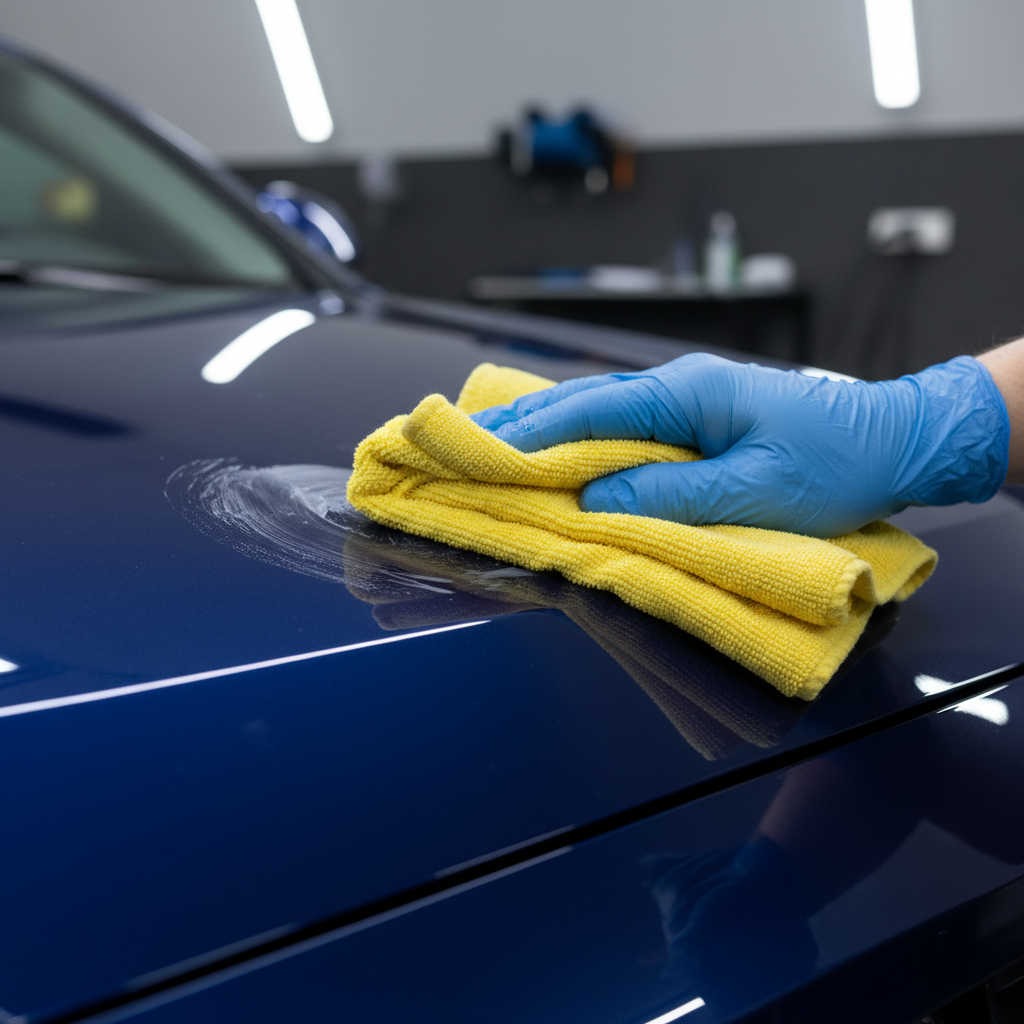
Step-by-step: how to remove glue residue from car after decal (without harming paint)
If you only follow one rule, make it this: start mild, then step up. The goal is to dissolve and lift, not grind it off.
1) Wash the area first
Use pH-balanced car soap and water, then dry with a clean microfiber. You’re removing grit that can scratch when you wipe the adhesive.
2) Warm the residue (optional, but often worth it)
A hair dryer is usually safer than a heat gun. Warm the spot until it feels slightly warm to the touch, not hot. This softens the adhesive so the remover can penetrate.
3) Apply adhesive remover and let it dwell
Spray onto a microfiber towel or applicator, not directly onto the panel if you’re near trim seams. Press and hold for 20–60 seconds. Many people wipe too soon, then blame the product.
4) Wipe in straight lines, flipping towels frequently
Use light pressure. As glue transfers, switch to a clean section of towel. If you keep wiping with a loaded towel, you’ll just smear adhesive around.
5) For thicker spots, lift gently with a plastic blade
Re-wet the area with remover (or soapy water as lubrication), then use a plastic razor blade at a shallow angle. No digging. If it doesn’t lift, add more dwell time and heat rather than pushing harder.
6) Final clean and inspection
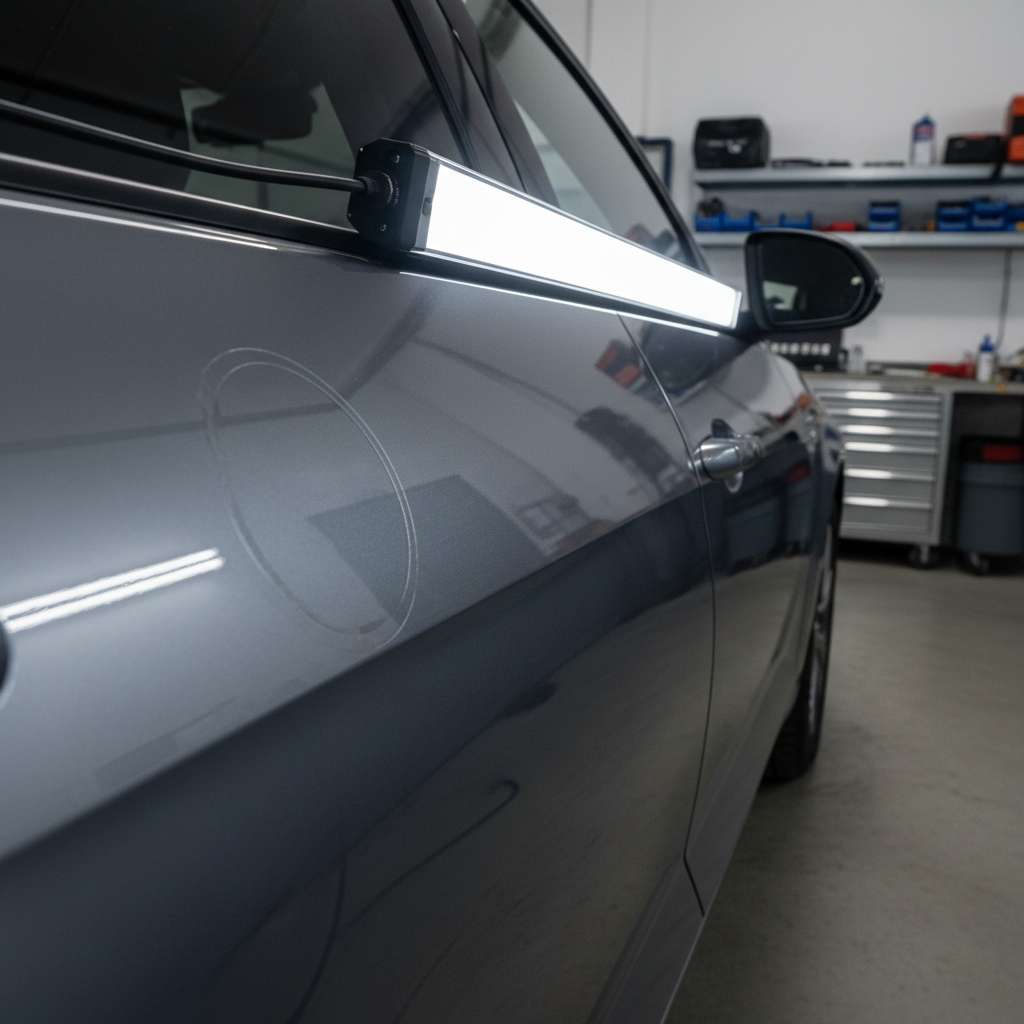
Wash the area again or do a careful wipe-down, then inspect in angled light. If you see a faint outline, it might be leftover adhesive, or it might be “ghosting” where the surrounding paint oxidized differently.
When the residue won’t come off: targeted fixes by scenario
This is where most people get frustrated, because the glue is only half the story. Try the scenario that matches what you see.
- Sticky film keeps smearing: Use less product, more dwell time, and switch towels more often. Smearing often means you’re spreading partially dissolved glue.
- Small dots of adhesive remain: Spot-treat with remover on a corner of microfiber, dab and lift rather than broad wiping.
- Hazy patch after removal: Could be light marring from wiping or a solvent mark. Wash first, then consider a mild polish. If you’re not comfortable polishing, a detailer can usually correct it quickly.
- Decal outline “shadow” but no stickiness: Often UV mismatch, not glue. A light polish may reduce it; sometimes it’s permanent without more aggressive correction.
Common mistakes that cause scratches, dull spots, or more residue
A lot of damage comes from “small shortcuts” that feel harmless in the moment.
- Dry scraping or using a metal blade: Even if it looks fine initially, it can leave micro-scratches that show in sun.
- Going straight to harsh solvents: Products like acetone or lacquer thinner can attack paint systems and plastics. Many body shops avoid them on finished exterior panels unless they control the process.
- Using a rough towel: If a microfiber feels grabby or stiff, don’t use it on paint for this task.
- Not re-washing after oily removers: Some removers leave residue that interferes with wax, sealant, or ceramic topper bonding.
- Working in direct sun: Solvents flash faster and can streak, while hot panels raise the risk of finish issues.
Finish protection: what to do after the glue is gone
After you remove adhesive, the surface is often stripped of wax, and sometimes slightly dry. A quick protection step keeps the area from looking “off” compared to the rest of the panel.
- Re-wash or do a paint-safe prep wipe: This removes leftover solvent or oils.
- Apply wax, sealant, or a spray ceramic topper: Pick whatever matches your current protection routine, consistency matters more than chasing a fancy product.
- If you polished: Protect immediately after; bare polished paint tends to attract contamination faster.
When it’s smarter to get professional help
If the panel has fresh repaint, if the residue sits on matte paint or matte wrap, or if you see clear coat damage (peeling, cracking, deep haze), it’s usually safer to stop. A reputable detailer or body shop can test products in a controlled way and correct defects if they happen.
Also, if you’re dealing with strong chemical odors or skin sensitivity, use gloves, ventilation, and follow product labels, and consider asking a professional to handle it.
Key takeaways (so you don’t overthink it)
- Wash first so you don’t grind dirt into the clear coat.
- Heat + dwell time usually beats aggressive scraping.
- Adhesive remover + microfiber solves most decal glue with low risk.
- Shadows aren’t always glue; sometimes it’s UV mismatch that needs polishing.
Conclusion: a clean panel without the drama
How to remove glue residue from car after decal is mostly a process game, not a strength game: clean the surface, soften the adhesive, dissolve it patiently, then protect the finish so the spot blends back in.
If you want a simple plan for today, do this: wash and dry, warm the area with a hair dryer, use an automotive adhesive remover with a microfiber towel and plenty of towel flips, then re-wash and add a quick wax or sealant.
FAQ
How do I remove decal adhesive without damaging clear coat?
Use a paint-safe adhesive remover, give it dwell time, and wipe gently with clean microfiber. Avoid dry scraping and harsh solvents, and always spot-test if you’re unsure.
Will rubbing alcohol remove glue residue on car paint?
It can help with light adhesive film, especially as a final cleanup step, but it’s not always strong enough for thick, sun-baked glue. Use it in moderation and expect it to strip wax in that area.
Is Goo Gone safe for removing decal glue from a car?
Many people use it successfully, but results depend on the specific product and the surface. Spot-test first, keep it off sensitive plastics when possible, and wash afterward because it can leave an oily layer.
What’s the safest scraper to use on car paint?
A plastic razor blade or plastic scraper, used with lubrication and a shallow angle. If you feel you need force, pause and switch back to heat and chemical dwell time.
Why is there still a shadow after I removed the glue?
If it’s not sticky, it may be oxidation or UV mismatch around where the decal protected the paint. A mild polish often reduces it, but some ghosting can remain depending on age and exposure.
Can I use WD-40 to remove adhesive from a car?
It may loosen some adhesives, but it leaves oily residue that must be cleaned thoroughly afterward, and it’s not designed as a paint-prep product. If you use it, treat it as a temporary aid and re-wash the panel.
How long should I let adhesive remover sit?
Often 20–60 seconds is enough for light residue, while older glue may need multiple short applications. Follow the product label and don’t let it dry on the paint.
What if the decal was on for years and nothing works?
At that point, you may be dealing with hardened adhesive plus paint mismatch. A professional detailer can combine safe chemical methods with polishing, and they’ll know when to stop before clear coat damage becomes expensive.
If you’re trying to clean up decal glue quickly and want a more predictable result, consider using a dedicated automotive adhesive remover, quality microfiber towels, and a plastic razor kit as a small “mini system”—it’s usually less stressful than mixing random household solvents and hoping for the best.