
best car organizer for trunk grocery storage usually comes down to one thing: how well it keeps bags upright, separated, and easy to grab without sliding around every turn.
If your trunk turns into a rolling pile of paper bags, sports gear, and reusable totes, you already know the annoying part isn’t loading groceries, it’s unloading a half-crushed loaf of bread and a tipped-over detergent bottle. A good organizer isn’t “extra,” it’s a small system that saves cleanup time and mental bandwidth.
This guide helps you pick the right trunk organizer for grocery runs and luggage, without overbuying. We’ll cover what matters in real use, a quick self-check, a comparison table, setup steps, and the common traps that make organizers feel useless.
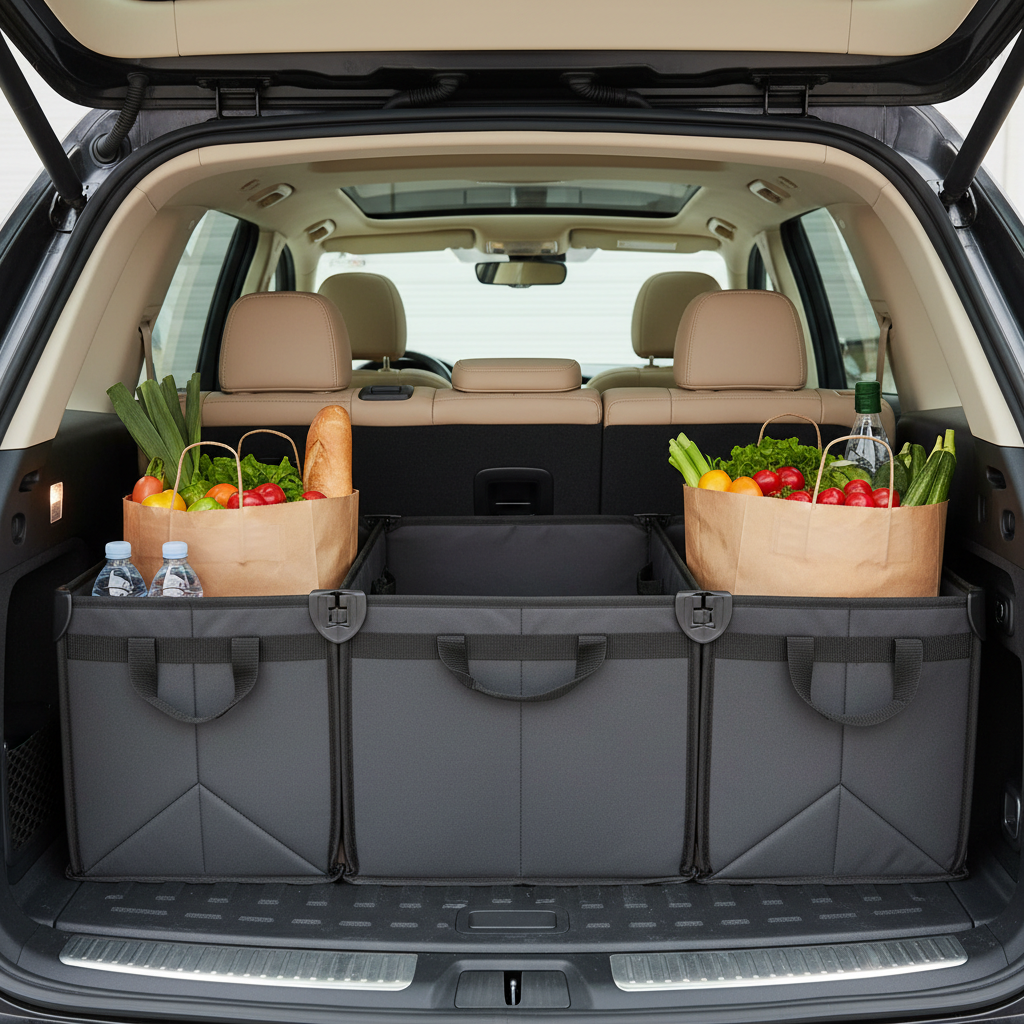
What “best” really means for trunk grocery & luggage organizers
People shop for “the best” and then get disappointed because the product wasn’t designed for their trunk or their habits. In practice, a trunk organizer works when it matches your cargo mix and your driving style.
- For groceries: the goal is upright support and separation, so produce, pantry items, and cleaning supplies don’t mingle.
- For luggage: the goal shifts to stability and edge protection, so suitcases stop slamming into each other and scuffing trim.
- For both: you want a structure that holds shape even when half-full, plus quick access so you don’t “dump and dig.”
Also, your vehicle matters. A deep SUV cargo well hides clutter but makes reach harder, while a sedan trunk needs a footprint that doesn’t block the spare-tire access panel.
Why trunk chaos happens (and what features actually fix it)
Most trunk messes come from a few predictable issues, and each has a feature that usually helps.
- Side-to-side sliding: common with plastic bins and smooth trunk liners, look for a grippy bottom, hook-and-loop strips, or tie-down straps that connect to cargo anchors.
- Bags collapsing: soft walls sag, so choose rigid panels or reinforced sides that stay upright.
- Items mixing: one big compartment turns into one big problem, dividers (adjustable is better) keep categories separated.
- Spills and crumbs: interiors that wipe clean matter more than “waterproof” claims, especially with produce and takeout.
- Awkward loading: if the lid or flap slows you down, you’ll stop using it, open-top designs with quick-grab handles tend to win.
According to NHTSA, loose items in a vehicle can become dangerous projectiles during sudden stops, so securing heavier bottles, tools, and emergency gear is a safety move, not just a tidy-trunk preference.
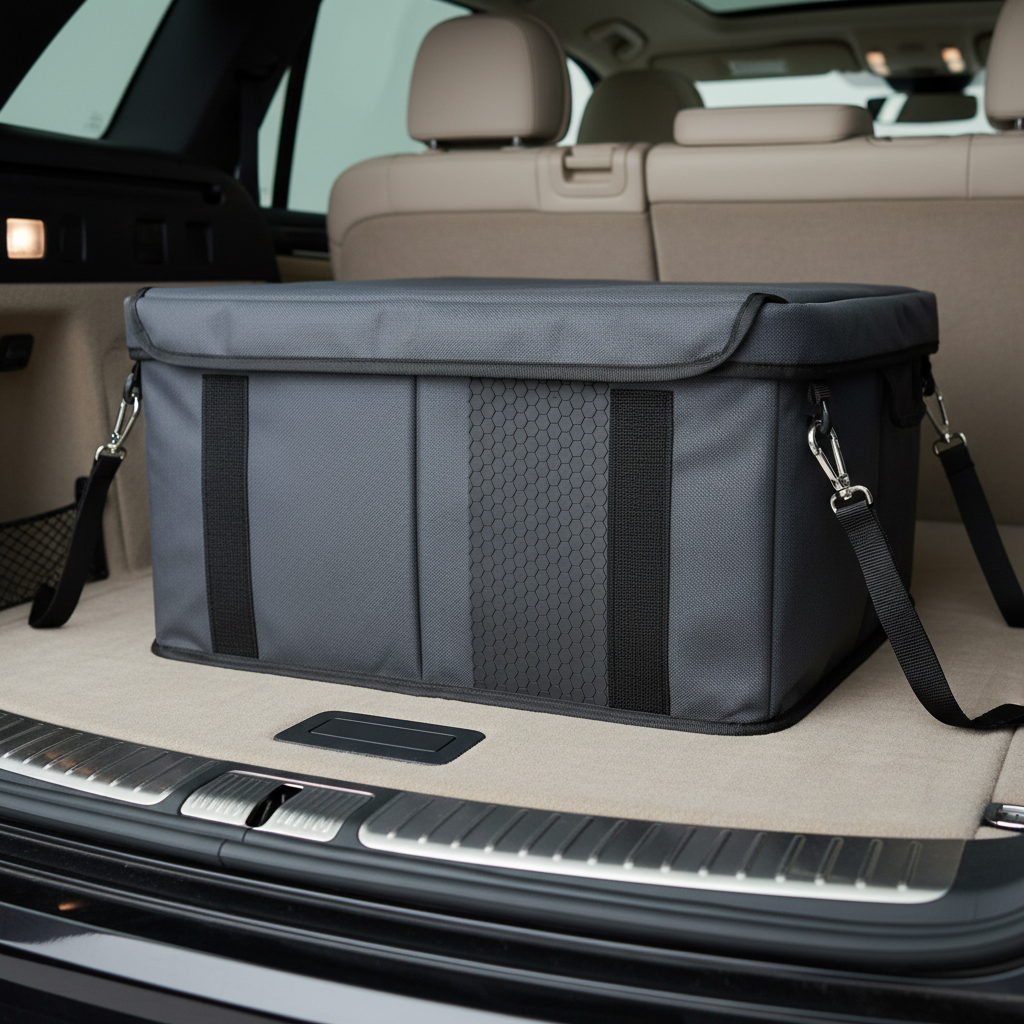
Quick self-check: which organizer style fits your trunk and routine?
If you answer these quickly, you’ll narrow your options fast, and avoid the “it looked great online” regret.
Your trunk layout
- Sedan trunk: favor medium-width organizers that sit flat and don’t block hinge arms or the pass-through.
- SUV/hatch: you can go wider, but consider lift-over height, too tall and you’ll hate loading it.
- Pickup bed (covered): weather and dust matter more, consider a lid or a hard-sided crate.
Your weekly cargo mix
- Mostly groceries: 2–3 compartments, rigid walls, and a non-slip base usually outperform jumbo “everything bins.”
- Groceries + sports gear: add a narrow side pocket for balls, shoes, or wet items in a washable pouch.
- Frequent airport trips: look for modular pieces you can remove, leaving trunk space for suitcases.
Your tolerance for setup
- Low tolerance: pick something that works without fiddling, fixed dividers and simple straps.
- High tolerance: adjustable dividers, collapsible designs, and add-on cooler inserts can be worth it.
Comparison table: picking the best car organizer for trunk grocery storage by scenario
Use this as a shortcut. “Best” here means best fit, not best hype.
| Scenario | Organizer type | What to look for | Watch-outs |
|---|---|---|---|
| Weekly grocery runs | Structured fabric, 2–3 compartments | Rigid walls, wipe-clean liner, non-slip bottom | Flimsy dividers collapse when half-full |
| Costco / bulk shopping | Large modular bins or two medium organizers | Removable sections, strong handles, wide openings | One oversized unit can be heavy and awkward |
| Groceries + cleaning supplies | Organizer with sealed/washable compartment | Dedicated “spill zone,” tall bottle support | Fabric absorbs odors if not wipeable |
| Family road trips | Organizer + separate soft cooler | Tie-down straps, side pockets, quick access | Coolers sweat, keep them separated from paper items |
| Luggage-heavy travel | Low-profile organizer or collapsible crate | Stability, edge protection, easy removal | Tall boxes waste vertical space with suitcases |
What to prioritize when you’re shopping (a practical checklist)
Specs are helpful, but a few details make or break daily use. Here’s what I’d treat as non-negotiable for most drivers.
- Real structure: reinforced walls or rigid panels that don’t bow when you carry it one-handed.
- Anchoring: straps to cargo hooks, or a grippy base that actually grips your trunk liner.
- Divider behavior: dividers should be stiff and tall enough to keep grocery bags upright, not just “separate socks.”
- Easy cleaning: smooth liner, removable bottom insert, or a surface you can wipe after a leaky rotisserie chicken.
- Handle strength: wide handles that don’t cut into your hand when it’s full of canned goods.
- Fold/flatten mode: useful when you need the full trunk for luggage or a big box.
If you’re comparing two similar options, pick the one that fits your trunk width cleanly. A “bigger” organizer often becomes dead weight when it doesn’t sit flat.
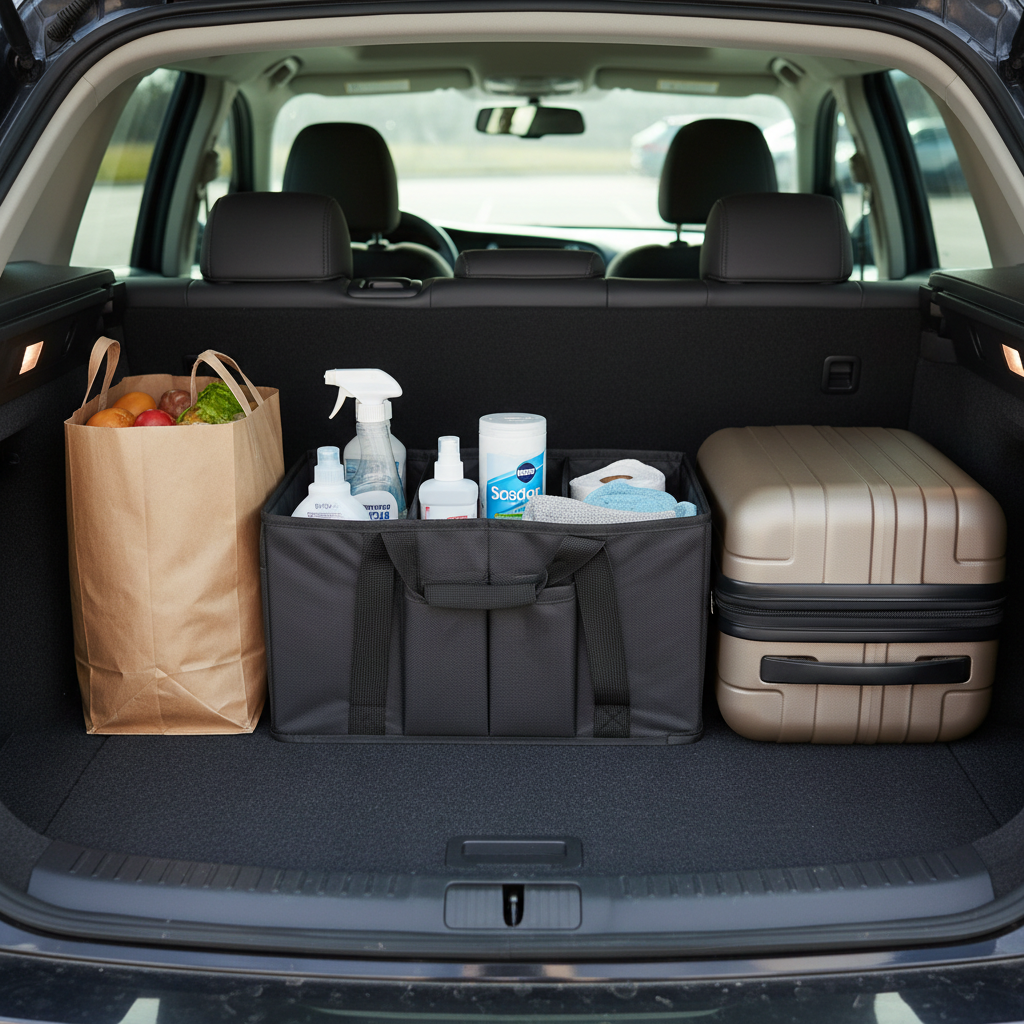
Setup that works: a 10-minute trunk organization routine
Even the best car organizer for trunk grocery storage can feel “meh” if you drop it in randomly. A quick setup makes it stick.
Step 1: Pick a default parking spot
Most people do better with a single default location, usually pushed against the seatbacks, centered for balance. If you load a stroller or wheelchair often, shift it to one side and keep that lane clear.
Step 2: Create three zones
- Daily zone: reusable bags, small cooler, wipes.
- Messy zone: cleaning products, muddy shoes, sports gear in a washable bin or pocket.
- Emergency zone: first-aid kit, roadside kit, blanket, flashlight, kept stable and not buried.
According to FEMA, having basic emergency supplies ready can help in unexpected roadside situations. You don’t need a doomsday trunk, just a sensible kit that stays put.
Step 3: Anchor and test drive
Strap it down, then take a short drive with a few heavy items. If it shifts, adjust the strap angle or move the organizer to a grippier section of liner. This tiny test saves months of annoyance.
Step 4: Pack groceries with “crush logic”
- Heavy items low, soft items high.
- Separate chemicals from food when possible.
- Put cold items together so a cooler insert actually helps.
Common mistakes that make trunk organizers feel pointless
Most complaints I see track back to expectations, not effort. A few course corrections help.
- Buying the tallest organizer available: tall walls can block rear visibility in hatchbacks and waste space with luggage.
- Ignoring trunk shape: wheel-well bumps and angled sides can leave organizers teetering.
- Using one mega compartment: it looks clean until the first sharp turn, then everything merges.
- Overloading the handles: organizers rip when treated like a duffel bag of dumbbells, split loads when you can.
- Skipping cleaning: one leak turns into a permanent smell, wipe it down before it “sets in.”
If your organizer keeps tipping, the fix often isn’t “buy another,” it’s anchoring plus making the heavy side sit closer to the car centerline.
When to consider a different solution (or get help)
There are cases where an organizer alone won’t solve the problem.
- Constant heavy gear: if you carry tools or equipment daily, a hard-sided crate or vehicle-specific cargo management system can hold up better.
- Frequent spills or allergies: you may want removable, washable bins, or a liner plus sealed containers.
- Safety concerns: if you transport heavy items that can move in a crash, consider professional advice on tie-down points or restraints. Many vehicles have cargo anchors, but safe use depends on the load and vehicle design.
If you’re unsure about securing heavy gear, it’s reasonable to ask a dealership service advisor or a qualified installer about safe anchor points for your specific vehicle.
Key takeaways (so you can choose fast)
- Structure + anchoring beat “big capacity” for most grocery and luggage use.
- Pick a size that fits your trunk footprint, not the biggest listing photo.
- Dividers matter when you want bags upright and categories separated.
- Do a quick test drive after strapping it in, small adjustments make it feel solid.
If you want a practical next step, measure your trunk width and depth, then choose an organizer style from the table above and commit to one default placement for a week.
FAQ
What size is best for a trunk organizer for groceries?
For many sedans and compact SUVs, a medium organizer with 2–3 compartments is easier to keep stable than an extra-large bin. If you bulk shop, two medium units often handle weight better than one huge organizer.
How do I stop my trunk organizer from sliding?
Look for a non-slip base and use tie-down straps connected to cargo anchors when available. If your trunk liner is very smooth, hook-and-loop strips may work better, but performance varies by carpet type.
Is a trunk organizer safe in a crash?
It can help reduce loose items, but only if it’s secured and not overloaded. Heavy objects should be strapped or placed low and stable; if you transport very heavy gear, consider professional guidance on restraints.
Do collapsible trunk organizers hold up over time?
Many do, but durability depends on panel reinforcement, stitching, and how often you carry dense loads like canned goods. If you fold and unfold daily, check hinge seams and handle attachments before buying.
What’s better for groceries, rigid plastic or fabric organizers?
Rigid plastic is easy to wash and can resist leaks, but it may slide more unless it has grip. Structured fabric often grips better and folds away, but you’ll want a wipe-clean liner to avoid odors.
Can I use a trunk organizer for luggage and groceries together?
Yes, but it works best when the organizer is low-profile or modular, so you can remove a section for suitcases. For airport runs, keeping one foldable unit plus a separate strap for luggage tends to be more flexible.
How often should I clean a trunk organizer used for food?
If you carry produce, meat, or takeout, a quick wipe after leaks keeps smells from settling in. A deeper clean monthly is a reasonable rhythm for many households, more often if spills happen.
If you’re trying to pick the best car organizer for trunk grocery storage without guessing, it helps to start with your trunk measurements and your most common load, then choose a structured, easy-clean organizer you’ll actually keep strapped in and ready to use.