
best car rear view mirror extension wide angle is usually what people search after one scary lane-change moment, when the “missing” car shows up out of nowhere and you realize your factory mirror view just is not enough.
The good news is you can often fix that feeling without changing the whole mirror assembly, a simple wide-angle extension can expand your field of view and make daily driving less stressful, especially in heavier U.S. traffic, on multi-lane highways, or when towing.
This guide breaks down what to buy, what to avoid, how to tell if you actually need an extension (or just a better adjustment), and how to install it so it stays put through heat, rain, and car washes.
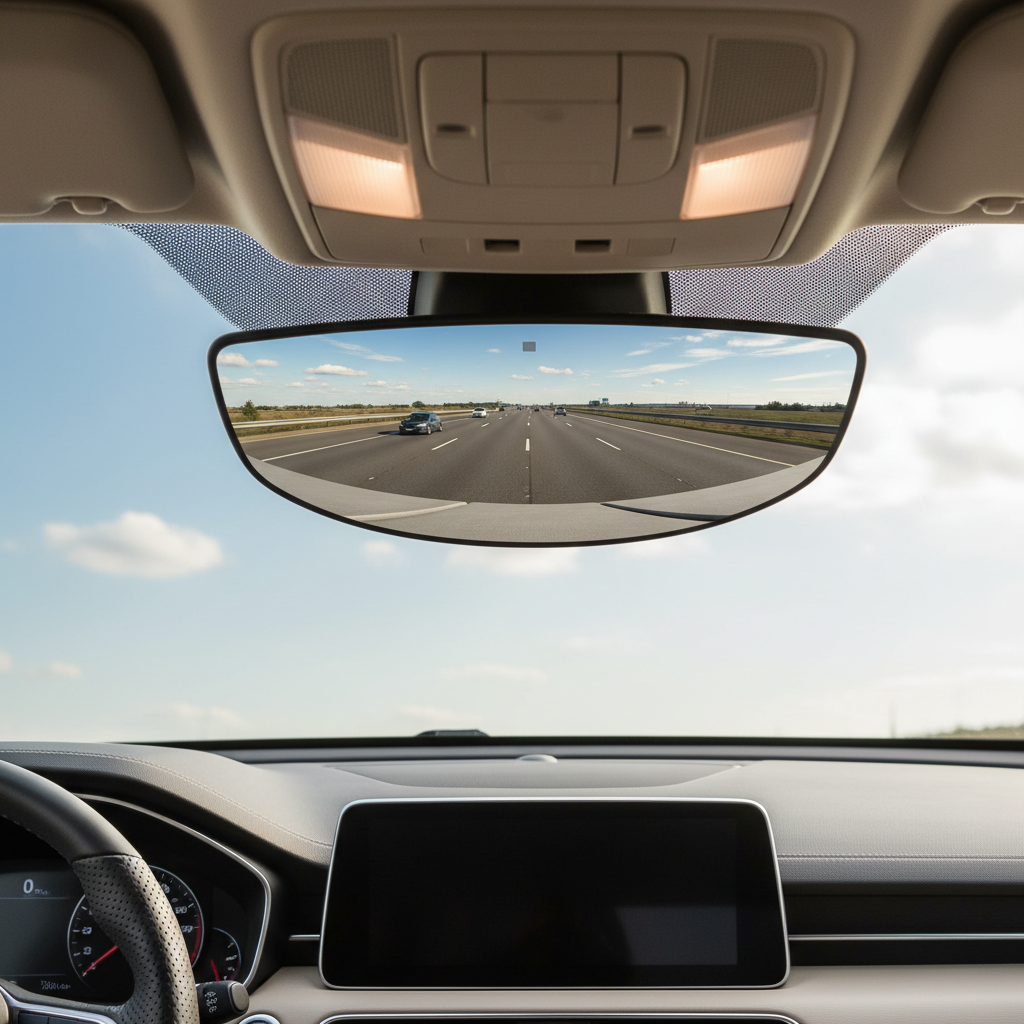
What a wide-angle rear view mirror extension actually does
A rear view mirror extension with a wide-angle surface changes what you see in two ways: it can widen the viewing angle, and it can shift your effective sightlines so you pick up more “in-between” space that normally becomes a blind zone.
- Wider field of view: convex glass shows more area, which helps spot vehicles that sit just outside the center mirror view.
- Better awareness in dense traffic: you see lane position changes earlier, even when cars move quickly across lanes.
- Tradeoff: convex mirrors make objects look smaller and farther away, so you need a short adjustment period.
According to the National Highway Traffic Safety Administration (NHTSA), blind spots and lane-change errors are real contributors to crashes, so improving what you can see is a practical safety upgrade, not just a comfort accessory.
Who benefits most (and who might not need one)
Not everyone needs the biggest mirror extension on the shelf. A lot of drivers can get meaningful improvement just by re-adjusting side mirrors correctly, and then adding an extension only if gaps remain.
Extension tends to help most when
- You drive a larger vehicle: SUV, pickup, van, or anything with thicker pillars and a taller rear end.
- You often carry passengers or cargo that blocks the rear window view.
- You tow a trailer, or use a hitch rack that partially blocks the rear view.
- You commute on multi-lane highways where quick merges are common.
You may not need an extension when
- Your OEM mirror already has a wide field of view and you rarely feel surprised by cars behind you.
- You mostly drive in low-speed local areas and your side mirror setup already covers blind spots well.
One practical way to decide: if you frequently “double-check” by leaning your head left and right to confirm a lane is clear, that is usually a sign your mirror coverage has gaps.

Quick self-check: do you need a rear view mirror extension wide angle?
Before buying, run this fast checklist in a safe parking lot or on a quiet road. You are looking for consistency, not perfection.
- Lane transition test: when a car passes you, can you follow it from center mirror to side mirror without it “disappearing” for a moment?
- Head movement test: do you need to lean forward or sideways to see a full lane behind?
- Night glare test: do headlights behind feel harsh even with the mirror in night mode (if available)?
- Rear obstruction test: do headrests, passengers, or cargo block your current rear view often?
If you answered yes to two or more, the best car rear view mirror extension wide angle option for you is usually the one that expands coverage without adding distortion or vibration.
Types of extensions: clip-on, stick-on, and full replacement
This category gets confusing because sellers call many things an “extension.” Here is the practical breakdown.
Clip-on wide-angle mirror extensions
- Pros: easy to remove, good for testing, often fits multiple vehicles.
- Cons: can shake on rough roads if the clamp design is weak, may not fit thick OEM mirror housings.
Stick-on convex mirror add-ons
- Pros: low cost, minimal bulk, can target a specific blind zone.
- Cons: adhesive quality matters, placement errors are common, removal can be annoying.
Full replacement wide-angle rear view mirrors
- Pros: clean look, stable fit, can include anti-glare tint or blue-tinted glass.
- Cons: more compatibility risk, sometimes blocks sensors or camera modules if your car integrates them near the mirror.
If your goal is simply more coverage with the least commitment, many drivers start with a clip-on. If you want a “set it and forget it” feel, a full replacement may suit better, assuming fitment checks out.
What to look for: a buyer’s table you can actually use
Specs can be messy online, so focus on a few make-or-break details that affect real driving.
| Feature | Why it matters | What to aim for |
|---|---|---|
| Mirror curvature | Controls how wide the view becomes vs how distorted distance feels | Moderate convex, not extreme “fish-eye” unless you truly need max coverage |
| Size and edge shape | Too large blocks sun visors or sightlines, sharp corners look cheap | Enough width to expand lanes, rounded corners for a clean fit |
| Mounting stability | Vibration makes the mirror useless at highway speed | Firm clamp, non-slip pads, or strong automotive-grade adhesive |
| Anti-glare treatment | Night driving comfort, reduces headlight dazzle | Anti-glare tint or compatibility with your OEM day/night function |
| Compatibility with cameras/sensors | Some cars have camera pods or rain/light sensors near the mirror | Confirm it will not block sensor housing or driver-assist cameras |
When people hate their purchase, it is usually because of wobble, a “funhouse” reflection, or a mount that interferes with sun visors. Those are avoidable if you check the basics.
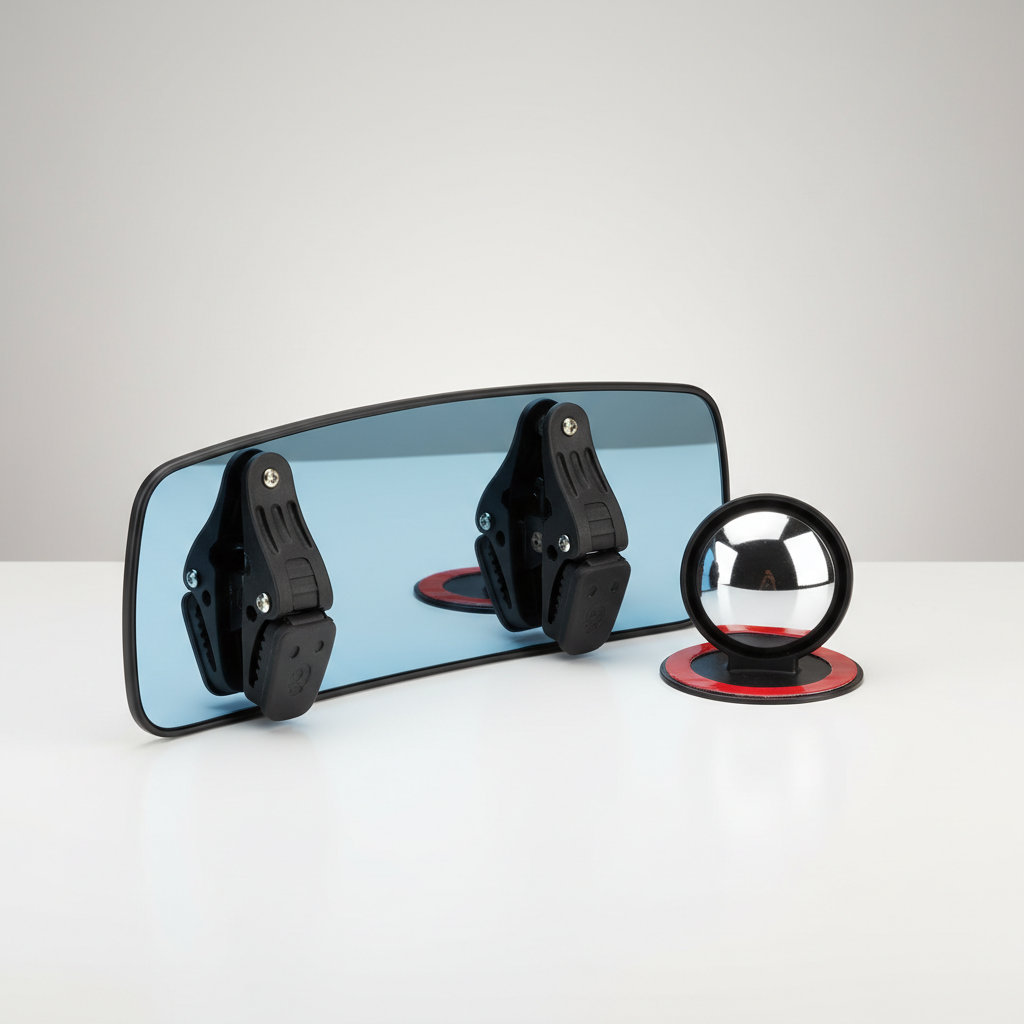
Installation that holds up: practical steps (no gimmicks)
Even the best car rear view mirror extension wide angle model can feel bad if it is mounted crooked or on a dirty surface. Take five minutes and do it right.
If you use a clip-on extension
- Wipe the OEM mirror edge and back with a dry microfiber cloth to remove dust.
- Test-fit before tightening, check sun visor clearance and full mirror range of motion.
- Tighten evenly, stop when the mirror cannot shift by hand, over-tightening can crack cheaper frames.
- Drive a short loop, then re-check clamp tension, vibration often shows up at 45–70 mph.
If you use a stick-on convex add-on
- Clean the mirror with isopropyl alcohol, let it dry fully.
- Place it where your blind spot “disappears,” usually outer-lower corner, but confirm with the lane transition test.
- Press firmly for 30–60 seconds, avoid washing the car right away, adhesive cures best with time.
In hot states, cabin temperatures can get brutal. If adhesive fails repeatedly, it is often the tape quality, not your technique, and switching to a different mounting approach can save time.
Common mistakes that make wide-angle mirrors feel worse
- Buying the widest curve available: extreme convex can shrink cars behind so much that distance judgment gets tricky.
- Stacking too many solutions: adding a huge rear extension and large convex side add-ons can overload your visual cues.
- Ignoring side mirror setup: a wide rear mirror does not replace proper side mirror adjustment, it complements it.
- Mounting too high: it can block the view of traffic lights in some vehicles, especially tall drivers in compact cars.
- Chasing “no blind spots” claims: in real driving, blind spots shift with vehicle shape, seating position, and traffic angle.
According to AAA, driver visibility and situational awareness matter as much as the equipment itself, so give yourself a short learning window after installing anything that changes mirror perspective.
When to consider professional help (or a different solution)
If your car has advanced driver-assistance systems near the mirror, or you notice warning lights after installing an accessory, it is safer to remove the extension and check the owner’s manual. Some setups are sensitive to blocked cameras or sensor housings, and a dealer or qualified technician can confirm what is safe for your vehicle.
If you tow regularly, a rear view extension may help, but you might also need towing mirrors or a camera system to cover angles a cabin mirror simply cannot see. That choice depends on trailer width, load height, and local driving conditions.
Key takeaways and a simple next step
A wide-angle rear view mirror extension works best when it fills real gaps in your view, stays stable at speed, and does not distort distance so much that you stop trusting what you see.
- Do the quick self-check before buying, it prevents most “returns.”
- Prioritize stability over maximum width, a shaky mirror helps nobody.
- Re-test your mirror coverage after installation, then fine-tune placement.
If you want an easy start, pick one product type, install it carefully, and give yourself a few commutes to adapt before you decide to upgrade again.
FAQ
What is the best car rear view mirror extension wide angle size for most sedans?
Many sedans do well with a moderate-width clip-on or a full replacement that adds coverage without blocking visors. If it forces you to look around it, it is probably too large for your seating position.
Do wide-angle rear view mirrors eliminate blind spots completely?
Usually not. They reduce gaps, but blind spots can still exist depending on vehicle shape, seat height, and how side mirrors are adjusted. Treat it as added visibility, not a guarantee.
Are convex mirrors legal in the United States?
Convex mirrors are common and generally allowed, but rules can vary by state and by placement. If you are unsure, check your state vehicle code or ask a local inspection shop.
Will a clip-on extension damage my factory mirror?
It can if the clamp has hard edges or you over-tighten it. Look for non-slip padding, tighten gradually, and stop once the unit holds steady during a light hand wiggle test.
How do I reduce headlight glare with a wide-angle extension?
An anti-glare tint can help, and many OEM mirrors have a night mode that still works with some extensions. If glare remains intense, consider repositioning the mirror slightly and confirm your rear window is clean.
Where should I place a small stick-on convex mirror on the rear view mirror?
Most drivers place it toward an outer-lower corner so it covers the area that disappears during the lane transition test. The “right” spot depends on your seating position, so test placement before committing.
Can a wide-angle extension interfere with driver-assist cameras or sensors?
It can on some vehicles, especially where a camera module sits behind or near the mirror. If anything looks blocked, or warnings appear, remove it and consult the manual or a professional.
If you are trying to pick a best-fit wide-angle extension fast, start by measuring your factory mirror, note any sensors around the mount, then choose a stable clip-on or a compatible replacement that matches your daily driving, not just the biggest spec on the product page.