
how to check car oxygen sensor function at home usually comes down to two things: confirming the sensor is actually switching like it should, and making sure the problem isn’t wiring, an exhaust leak, or a different engine issue pretending to be an O2 sensor.
That matters because an oxygen sensor affects fuel trim, emissions, and sometimes drivability, but it’s also one of the most commonly misdiagnosed parts on a check-engine-light car. People see an “O2 sensor code,” buy a sensor, and the light comes back.
In this guide, you’ll get a practical at-home workflow: quick symptom checks, a simple decision checklist, and two test paths—using an OBD2 scan tool (easier) or a multimeter (more hands-on). I’ll also call out the gotchas that waste time, like heater-circuit issues and tiny exhaust leaks upstream.
What an oxygen sensor does (and which one you should care about)
An oxygen sensor (O2 sensor) reports oxygen content in the exhaust so the ECU can adjust fueling. In normal closed-loop operation, the engine constantly “corrects” mixture based on this feedback.
Most cars have at least two sensors per bank:
- Upstream (Sensor 1): before the catalytic converter, controls fuel trim and usually has the biggest drivability impact.
- Downstream (Sensor 2): after the cat, mainly monitors catalytic converter efficiency, often triggers emissions-related codes more than drive issues.
If you’re trying to decide where to focus, upstream testing usually gives you faster answers. Downstream issues can be real, but they’re also where “the cat is weak” and “there’s an exhaust leak” can masquerade as a sensor problem.
According to the U.S. Environmental Protection Agency (EPA), oxygen sensors play a key role in maintaining low emissions by helping the engine maintain proper air-fuel control.
Common signs your O2 sensor may not be working right
These symptoms don’t guarantee a failed sensor, but they’re the usual reasons people start searching how to check car oxygen sensor function.
- Check Engine Light with O2, fuel trim, or catalyst-related codes
- Noticeably worse fuel economy without a clear driving-habit change
- Rough idle or occasional stumbling once warmed up
- Failed emissions test (or monitors not ready)
- Sulfur/“rotten egg” smell (can be cat-related, not always sensor)
One reality check: if the car runs perfectly and only a downstream code shows up, the sensor might be fine and reporting a cat efficiency issue, or it might be reacting to a small exhaust leak.
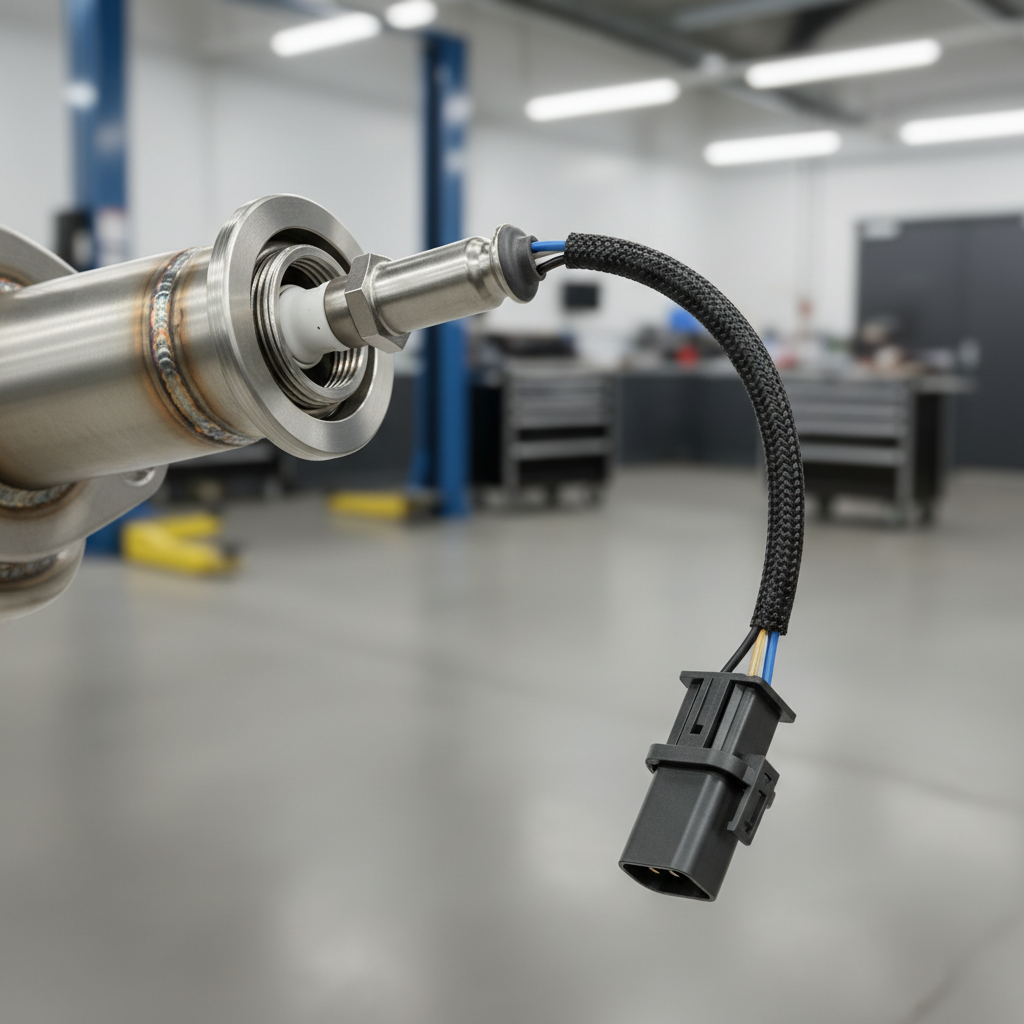
Quick self-check: do you likely have a sensor issue, a heater issue, or something else?
This is the part most DIYers skip, then wonder why the new sensor didn’t help. Use this short checklist before deeper testing.
- Code mentions “heater circuit” (P0135, P0155, etc.): often wiring, fuse, relay, connector corrosion, or the heater inside the sensor.
- Code mentions “slow response” or “stuck” (P0133, P0131/P0132, etc.): could be sensor aging, but also vacuum leaks, misfires, exhaust leaks, or fuel delivery issues.
- Multiple cylinders misfiring: fix ignition/fuel/misfire first, O2 readings become unreliable during misfire.
- Loud ticking near manifold or visible soot: possible exhaust leak upstream, it can pull oxygen in and fake a lean signal.
- Aftermarket intake/mods: MAF scaling and unmetered air can drive trims and trigger O2-related codes.
If you can only do one “free” test, start with a careful visual: damaged harness, melted insulation near the exhaust, loose connectors, and any obvious leak marks are common.
Tools and safety notes before you test at home
You don’t need a full shop, but you do need to be smart about heat and moving parts. An exhaust can burn you quickly, and fans can kick on without warning.
- OBD2 scan tool (basic live data works; graphing helps)
- Digital multimeter (for heater checks and some signal checks)
- Work gloves and eye protection
- Back-probe pins (optional, avoids damaging connectors)
Safety-wise, keep hands, cables, and clothing away from belts and fans. If you need to lift the car, use a quality jack and jack stands; if you’re not confident, it’s reasonable to stop and ask a shop for help.
Method 1 (recommended): check O2 sensor function with live data on an OBD2 scanner
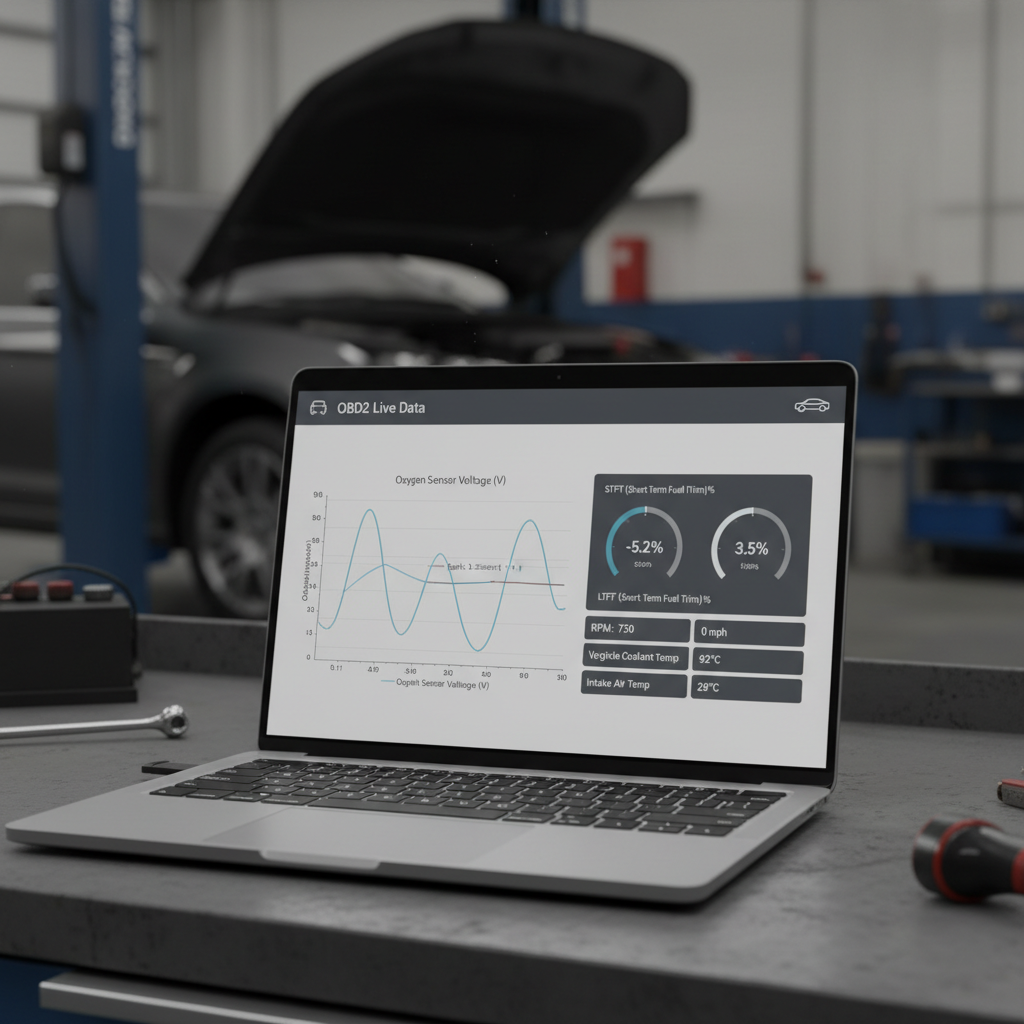
If you’re learning how to check car oxygen sensor function, live data is usually the cleanest path because you can see if the sensor switches and how fuel trims react.
Step-by-step live data workflow
- Warm the engine fully: O2 sensors and closed-loop control need heat. Wait until coolant temp is at normal operating range.
- Confirm closed loop: your scanner often shows “CL” (closed loop). If it stays in open loop, don’t trust O2 switching yet.
- Pull up Bank 1 Sensor 1 (and Bank 2 Sensor 1 if applicable): look for rapid switching on a narrowband sensor.
- Watch STFT and LTFT: short-term and long-term fuel trim tell you how hard the ECU is correcting.
What “normal” often looks like (and what doesn’t)
Exact numbers vary by vehicle and sensor type, but these are useful heuristics.
| What you see on live data | What it often suggests | What to check next |
|---|---|---|
| Upstream O2 voltage rapidly switching (narrowband) | Sensor likely alive, ECU correcting mixture | Look at trims, misfire counters, and vacuum/exhaust leaks if codes persist |
| Upstream O2 “stuck” low (lean) or high (rich) | Could be sensor, could be real lean/rich condition | Check fuel trims, MAF readings, vacuum leaks, fuel pressure (if possible) |
| O2 reacts very slowly to throttle changes | Aging sensor or exhaust leak dilution | Inspect upstream exhaust, verify heater operation, compare to other bank if V6/V8 |
| Downstream sensor mirrors upstream switching | Catalyst may not be storing oxygen well | Check for exhaust leaks, cat efficiency codes, confirm correct sensor placement |
| Fuel trims very positive at idle, improve with RPM | Vacuum leak common pattern | Smoke test if available, inspect PCV hoses, intake boots, gasket areas |
A simple “response” test you can do without special tools
With the engine warm and idling, give a quick, small throttle blip and let it settle. A healthy upstream sensor usually changes quickly as fueling changes. If it’s lazy and trims swing hard, you may be looking at a tired sensor, but confirm there’s no exhaust leak or misfire skewing the signal.
Key point: an O2 sensor can be “working” electrically while still being a bad source of truth because the engine is actually running lean/rich. That’s why trims matter.
Method 2: check the O2 sensor heater circuit with a multimeter
Many O2 codes are heater-related because the heater helps the sensor reach operating temperature quickly. If the heater doesn’t work, the sensor may be slow, the car may stay open-loop longer, and codes appear even if the sensing element is fine.
What to do
- Find the correct sensor connector: confirm bank/sensor position so you don’t test the wrong one.
- Key on, engine off: check for power supply to the heater circuit (often battery voltage on one heater wire).
- Check ground control: some vehicles ground the heater through the ECU, so you may need a wiring diagram to interpret results.
- Measure heater resistance: with the sensor unplugged, measure across the heater pins. An open circuit often indicates a failed heater element.
Because pinouts vary widely, use a service manual or reliable wiring diagram source for your exact model. If you guess pins, it’s easy to get nonsense readings or damage a connector.
If your readings look “wrong”: fixes that usually work (by scenario)
Here’s where people want a single answer, but reality is more conditional. Match the fix to the pattern you saw.
Scenario A: Heater circuit code, sensor data flat until warm
- Inspect harness near the exhaust, look for melted sections and tight bends.
- Check related fuses and relays if your vehicle uses a fused heater feed.
- Clean and reseat the connector, look for green corrosion or pushed pins.
- If power/ground are correct and the heater is open, replacing the sensor is often reasonable.
Scenario B: “Lean” codes with high positive trims
- Check for vacuum leaks: PCV hose splits, intake boots, brake booster line, loose oil cap or dipstick on some engines.
- Listen for exhaust leaks upstream of the sensor, especially at manifold gaskets and flex joints.
- If trims stay high under load too, fuel delivery can be a suspect; that’s usually where a shop-level pressure/volume test helps.
Scenario C: “Rich” codes with negative trims
- Look for leaking injectors, high fuel pressure, or EVAP purge valve stuck open (varies by model).
- Don’t ignore coolant temp sensor or thermostat issues; an engine that never warms up can run rich longer than expected.
Scenario D: Catalyst efficiency code (often P0420/P0430)
- Verify there’s no exhaust leak, especially near the downstream sensor.
- Confirm you have the correct sensor type and it’s installed in the correct bung.
- If upstream and downstream traces look too similar, the catalytic converter may be weak, but diagnosis is vehicle-specific.
According to SAE International, OBD-II monitoring uses sensor feedback to evaluate catalyst and oxygen sensor performance, so codes can point to a system behavior, not always a single failed part.
Mistakes that waste money when testing O2 sensors
- Replacing based on the code text alone: an “O2 sensor circuit” code can be wiring, connector, or ECU control.
- Testing a cold engine: you’ll misread switching behavior if the car isn’t in closed loop.
- Ignoring trims: a sensor may report “lean” because the engine truly runs lean.
- Forgetting exhaust leaks: a tiny leak before the sensor can pull in air and skew readings.
- Using the wrong sensor location: Bank/Sensor naming trips people up all the time.
When it’s time to get professional help
If you’ve done the basics and still can’t explain the readings, it’s reasonable to hand it off. A shop can run smoke tests for intake leaks, perform fuel pressure/volume checks, and use an oscilloscope for precise sensor waveforms.
Also, if you suspect catalytic converter failure, a professional diagnosis is worth it because cats are expensive and the root cause might be misfires or oil burning. If those underlying issues persist, a new converter can fail early.
Conclusion: a simple at-home path that keeps you from guessing
If you want a dependable way to check O2 performance at home, start with live data on a warm engine: confirm closed loop, watch upstream switching, and read fuel trims like a story. Then back it up with a heater-circuit check if the codes point that direction.
Your next action: scan live data for 5 minutes and write down STFT/LTFT at idle and at 2,500 RPM, those two snapshots often reveal whether you’re chasing a sensor or a bigger air/fuel problem.
Key takeaways
- Upstream sensors drive fueling, downstream sensors mostly judge the catalytic converter.
- Closed loop matters: no warm engine, no trustworthy switching test.
- Fuel trims are the context that makes O2 sensor readings meaningful.
- Heater codes often involve wiring or heater failure, not the sensing element alone.
FAQ
- Can I test an oxygen sensor without a scan tool?
Yes, you can check the heater circuit with a multimeter and do basic wiring inspection, but evaluating switching behavior is much easier with live OBD2 data. - What voltage should an upstream O2 sensor read?
Many vehicles use narrowband sensors that switch across a range rather than sit at one “correct” voltage. The more useful question is whether it switches quickly once warm and in closed loop. - Why do I have an O2 sensor code right after replacing the sensor?
Common causes include a connector not fully seated, damaged wiring near the exhaust, an exhaust leak, or a fueling issue that the new sensor accurately reports. Double-check bank/sensor position too. - Will a bad O2 sensor cause rough idle?
It can, especially if it’s upstream and slow or biased, but rough idle is also frequently vacuum leak or misfire related. Check for misfire codes and look at idle fuel trims before blaming the sensor. - How do I know if it’s the catalytic converter or the downstream O2 sensor?
If the downstream signal closely follows the upstream behavior on a warmed engine, the ECU may interpret that as low catalyst efficiency. Still, leaks and incorrect sensors can mimic this, so verify basics before calling the converter bad. - Is it safe to drive with an oxygen sensor problem?
Many cars remain drivable, but fuel economy and emissions may suffer, and prolonged rich running can overheat the catalytic converter. If the car runs poorly or flashes a misfire light, reduce driving and consider professional diagnosis.
If you’re trying to confirm how to check car oxygen sensor function quickly and you’d rather not interpret raw numbers, a basic OBD2 scanner with live data and graphing can make the job far less guessy, especially when you compare upstream switching with fuel trim behavior.