
how to clean car wheels without water comes down to two things: using the right chemistry for brake dust, and using the right touch so you don’t grind grit into the finish.
If you live in an apartment, deal with water restrictions, or just want a quick touch-up before work, waterless wheel cleaning can be genuinely practical. The catch is that wheels collect sharp particles and metallic brake dust, so the “quick wipe” approach that works on paint can scratch wheels fast if you skip prep.
This guide walks you through when waterless cleaning is safe, how to tell what kind of grime you’re dealing with, and a method that minimizes marring. I’ll also call out the moments you should stop and switch to a rinse-based wash, because sometimes that’s the safer “no regrets” choice.
When waterless wheel cleaning is a good idea (and when it isn’t)
Waterless methods work best for light-to-moderate grime: fresh brake dust film, road haze, and fingerprints around lug areas. It’s also a solid option for coated wheels, because coatings reduce how tightly dust bonds.
But there are situations where you’re better off not forcing it. If you’re seeing chunky sand, caked-on salt, or thick brown buildup, you may be pushing abrasive particles around.
- Usually OK: light dust, recent rain spots, light road film, weekly maintenance.
- Use caution: wheels that haven’t been cleaned in months, matte finishes, delicate bare/polished aluminum.
- Skip waterless and rinse instead: visible grit clumps, heavy mud, winter salt crust, track-day brake dust, hot wheels right after driving.
Heat matters more than people think. Let wheels cool fully before using any product, especially if it contains strong cleaners.
What’s actually on your wheels: brake dust vs. road grime
If you treat all wheel dirt the same, you’ll either waste time or risk damage. Brake dust often contains iron particles from pads and rotors, and it can bond to clear coat or paint.
According to U.S. Environmental Protection Agency (EPA), many household and automotive chemicals can irritate skin and lungs, so ventilation and gloves are a sensible baseline even for “simple” detailing steps.
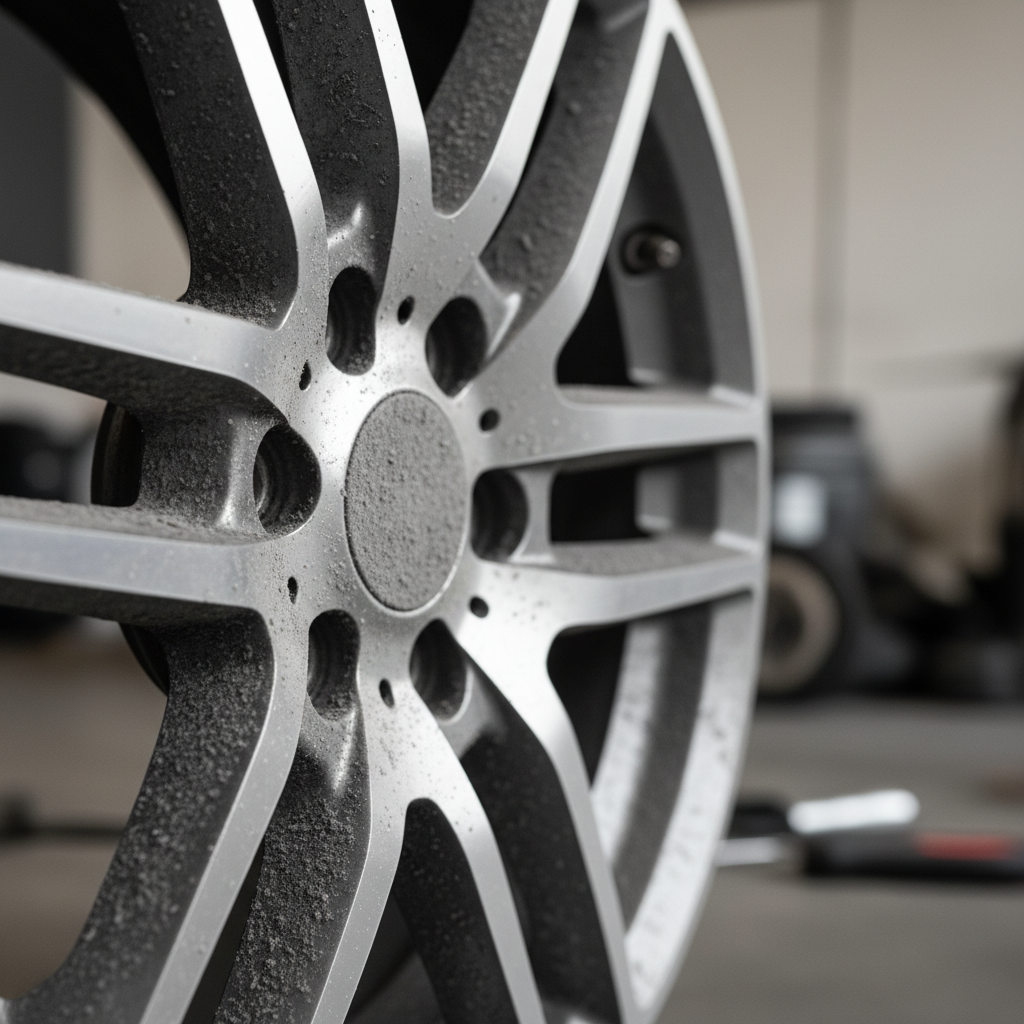
Here’s a quick way to “read” the surface before you touch it:
- Gray/black film on face: typical brake dust, often manageable with a wheel-safe waterless cleaner.
- Orange specks: likely iron contamination; you may need an iron remover, which many people prefer to use with a rinse.
- Brown sticky patches: tar or road asphalt; needs a tar remover and careful wiping.
- White crust: salt/mineral deposits; waterless wiping can scratch if crystals are present.
One more subtle clue: if your towel feels “crunchy” after a single pass, that’s grit. Stop and change approach.
Safety and finish protection: wheels aren’t all the same
Different wheel finishes react differently to cleaners and scrubbing. A product that’s fine on clear-coated factory wheels might be too aggressive for raw metal or certain aftermarket coatings.
| Wheel finish | Waterless cleaning risk level | What to do |
|---|---|---|
| Clear-coated painted/alloy (most OEM) | Low to medium | Use wheel-safe waterless spray, multiple towels, light pressure. |
| Powder-coated | Low | Generally forgiving, still avoid gritty wiping. |
| Chrome | Medium | Avoid abrasive pads; dry gently to reduce spotting. |
| Matte/satin finishes | Medium to high | Use matte-safe products; don’t “polish” with pressure. |
| Bare/polished aluminum | High | Test spot first; consider rinseless/rinse cleaning to reduce scratching. |
If you’re unsure what finish you have, treat it as sensitive. That mindset prevents most accidental damage.
A quick self-check before you start (30 seconds)
This is the “do I proceed or not” checklist. It saves you from the classic mistake: trying to waterless-clean a wheel that really needs a rinse.
- Wheel is cool to the touch: yes/no
- No visible sand clumps in barrel/behind spokes: yes/no
- Dust looks like a film, not a thick crust: yes/no
- You have at least 2–4 clean microfiber towels: yes/no
- You can work in shade or out of direct sun: yes/no
If you answered “no” to two or more, you’ll usually get a safer result with a rinseless wash bucket or a quick pressure rinse.
Step-by-step: how to clean car wheels without water (scratch-minimizing method)
This is the process that tends to work in real driveways and parking garages without turning into a swirl-mark project.
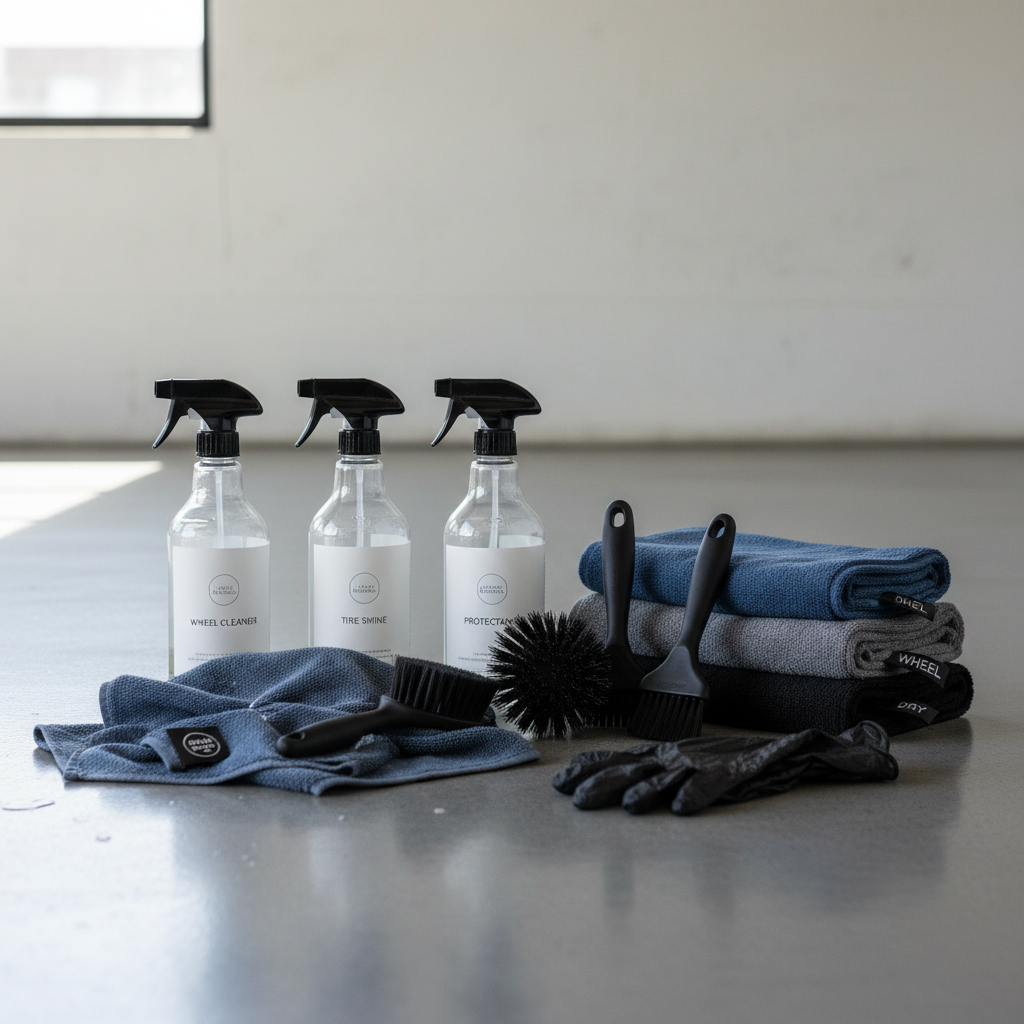
1) Gather the right tools
- Wheel-safe waterless cleaner (label should mention wheels, and ideally “safe for clear coat”)
- Microfiber towels (at least 2 per wheel if they’re dirty)
- Soft detailing brush for lug nuts and tight seams
- Nitrile gloves and eye protection if you’re sensitive to chemicals
Skip paper towels and old T-shirts. They’re a common source of fine scratching on glossy finishes.
2) Pre-spray generously and let it dwell
Mist the wheel face until it looks evenly wet, then give it 30–60 seconds. The dwell time is what “floats” dirt so your towel doesn’t do all the work.
Don’t let it dry on the wheel. If it’s drying, you’re either in sun or using too little product.
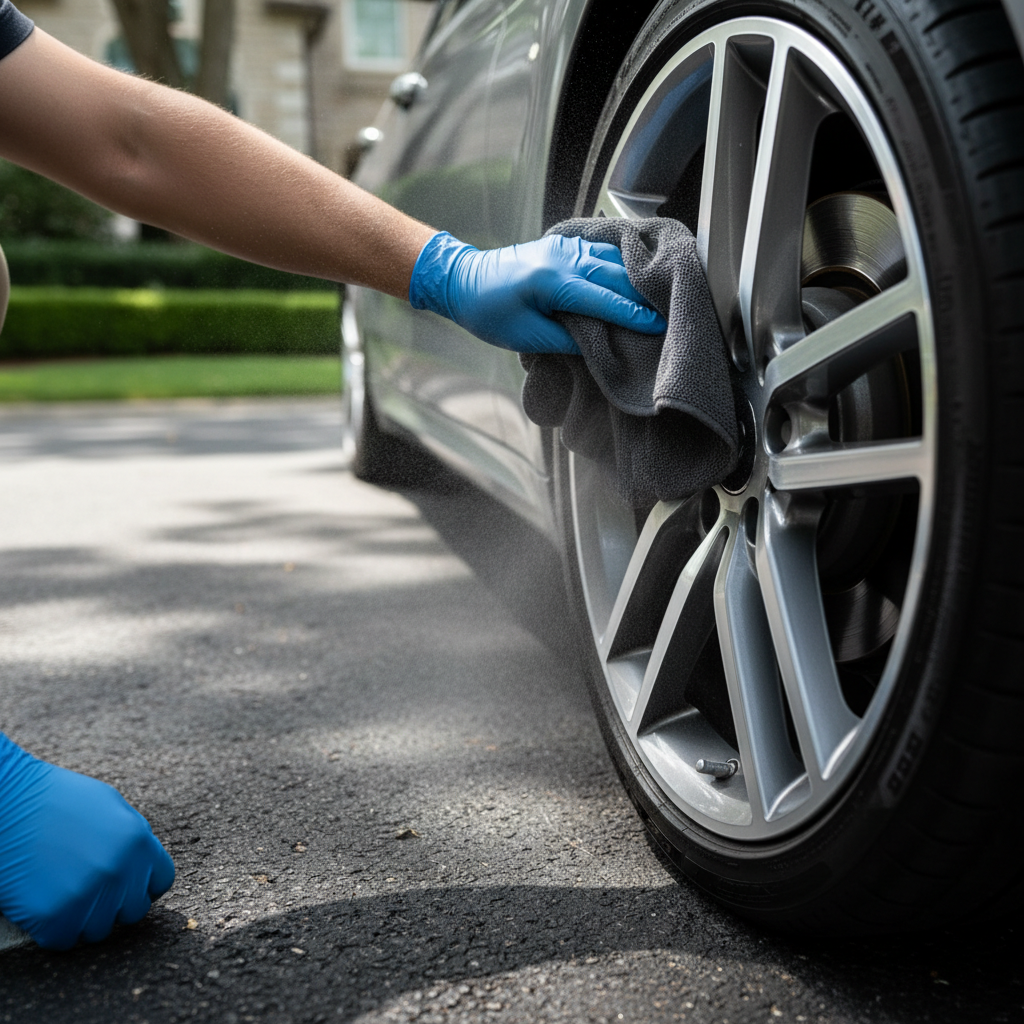
3) Wipe with light pressure, top to bottom, and flip often
Use straight-line wipes, not tight circles. After each small section, flip to a clean side. This is where most people go wrong: they keep using the same dirty patch of towel and basically sand the finish.
- Start with spokes and face
- Then hit lug areas with a lightly sprayed brush
- Finish with the outer lip
4) Use a second towel to buff dry
Once the grime is lifted, follow with a dry microfiber to remove remaining product and reduce streaking. On darker wheels, this step matters.
If you want extra protection, apply a spray sealant made for wheels after cleaning, but keep it light. Over-applying protection products can smear and attract dust.
Common mistakes that cause scratches, streaks, or dullness
- Cleaning right after driving: heat speeds drying and can make chemicals react more aggressively.
- Not using enough lubrication: a “light mist” rarely cuts it on wheels.
- One towel for the whole job: if the towel looks gray, it’s already loaded.
- Scrubbing the barrel blindly: barrels hide grit; waterless wiping back there is higher risk.
- Using household degreasers: they may discolor finishes over time; many aren’t designed for wheels.
Also worth saying out loud: if you drop a microfiber on the ground, retire it from paint and wheels. Even if it “looks fine,” it can pick up sand.
When you should step up to stronger methods (or get help)
Waterless cleaning has limits. If you see orange iron spots everywhere, if the wheel feels rough after cleaning, or if brake dust returns almost immediately, you may be dealing with embedded contamination.
- Consider an iron remover for embedded brake dust. Many products work best with a rinse; follow the label and test a small area.
- Consider clay or a decon towel for roughness, but this can mar some finishes and usually needs lubrication.
- Consider professional detailing if you have high-end aftermarket wheels, unknown finishes, or existing pitting/corrosion.
According to Occupational Safety and Health Administration (OSHA), chemical exposure controls like ventilation and proper protective equipment help reduce risk, so if you’re using stronger cleaners in an enclosed garage, take that seriously or consult a professional.
Key takeaways (so you remember this next time)
- Cool wheels + plenty of product makes waterless cleaning safer.
- Multiple clean microfibers beat one “do-it-all” towel every time.
- Film is fine, crust is not; heavy grit usually needs rinsing.
- Finish matters, especially matte and bare metal wheels.
If you keep your wheels on a maintenance schedule, cleaning without a hose becomes much easier, and you won’t feel like you’re fighting baked-on dust every time.
Conclusion: a realistic way to keep wheels clean without a hose
how to clean car wheels without water safely is mostly about restraint: don’t rush, don’t press hard, and don’t try to “win” against heavy grit with a towel. Use enough wheel-safe product to float dirt, rotate towels like you mean it, and save the deeper decontamination for a day when rinsing is possible.
If you want one action step, pick a simple cadence, like a quick waterless wipe once a week. It keeps brake dust from bonding, and that’s the difference between a five-minute cleanup and an all-afternoon struggle.
FAQ
- Is it safe to clean wheels without water?
It can be, especially for light dust on clear-coated wheels, but it’s less forgiving when there’s visible grit or heavy buildup. When in doubt, rinse first. - What product works best for waterless wheel cleaning?
Look for a wheel-safe waterless wash or detail spray designed to provide lubrication. If your main issue is embedded brake dust, an iron remover may help, though many people prefer using it with a rinse. - Can I use a regular waterless wash on wheels?
Sometimes, but wheels typically carry sharper contamination than paint. If the label doesn’t mention wheels, test a small spot and be conservative with pressure. - How do I avoid scratching black or gloss wheels?
Use more product than you think, wipe gently in straight lines, and swap towels often. Gloss black shows marring easily, so “clean towel discipline” matters. - How often should I do waterless wheel cleaning?
Weekly or every other week works for many daily drivers, depending on brake pad type and driving conditions. The longer you wait, the more you’ll need to scrub, and that’s where risk climbs. - Can I clean the inner barrel without water?
You can, but it’s higher risk because barrels hide grit and thick dust. If you must, use a very soft brush, lots of product, and stop if the brush starts dragging. - Why do my wheels look streaky after waterless cleaning?
Often it’s product drying too fast, using too little product, or buffing with an overloaded towel. Try working in shade and finishing with a clean, dry microfiber.
If you’re trying to keep wheels presentable between full washes, a wheel-safe waterless cleaner plus a small stack of dedicated microfiber towels is usually the most “low drama” setup, and it’s easy to store in the trunk for quick touch-ups.